Retiring in Thailand? This Guidebook is a Must Read
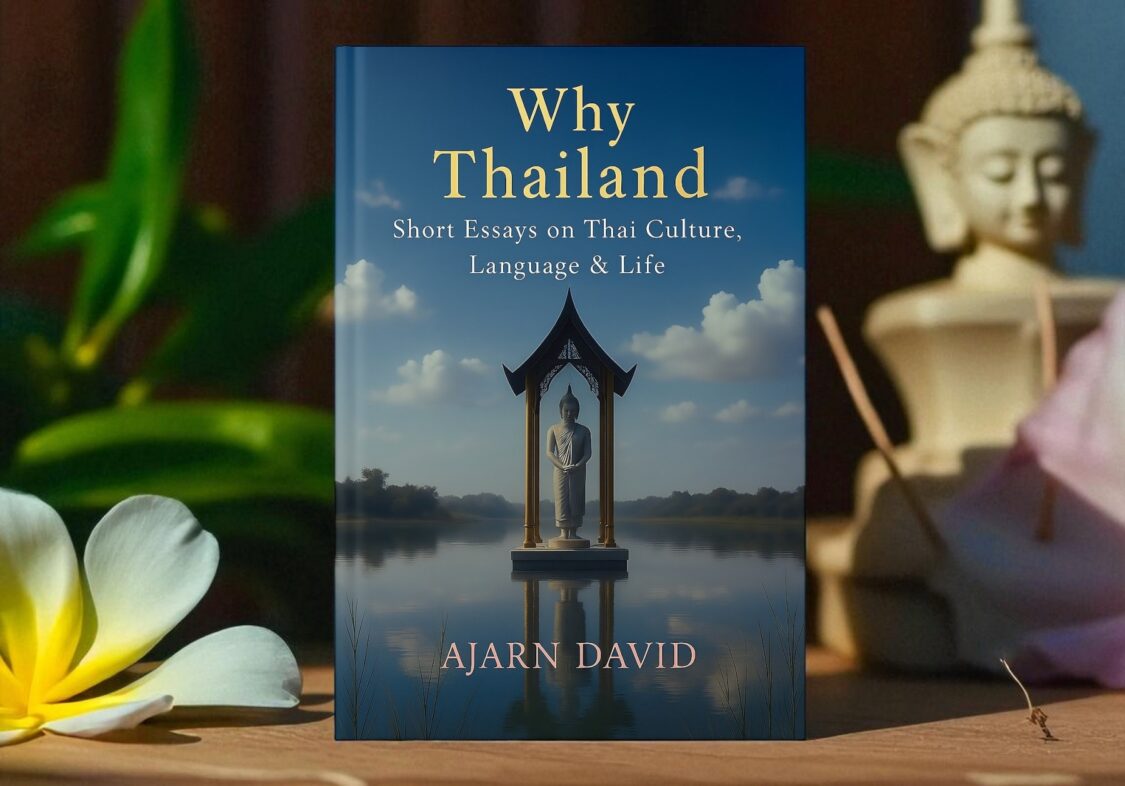
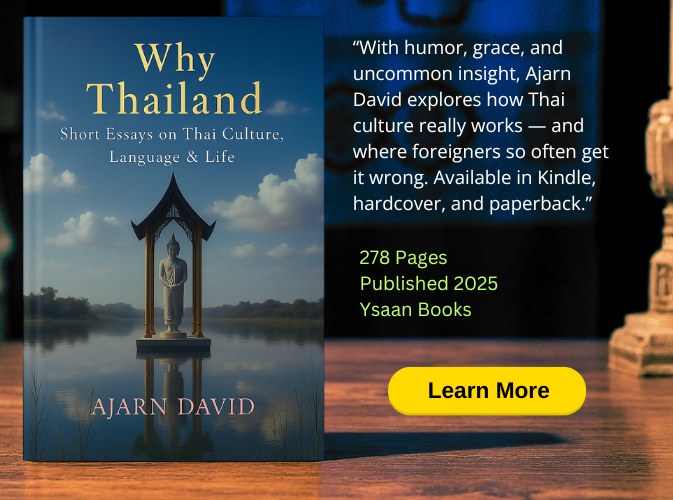
Most Thailand retirement guides calculate costs. But in Why Thailand: Short Essays on Thai Culture, Language & Life (Ysaan Books, 2025), Ajarn David calculates meaning. Written by a university lecturer who has lived and taught in Thailand for more than two decades, this collection of seventy-five concise essays shows prospective retirees how to live well in Thailand — socially, emotionally, and ethically — not just where to live. It reads less like travel chatter and more like a practical philosophy for the next chapter.
From logistics to belonging
Thailand is friendly to newcomers, but the difference between getting by and belonging is cultural literacy. Across essays such as “The Art of Being Greng Jai,” “Saving Face,” “A Culture of Respect,” and “The Wai & Its Meaning,” Ajarn David explains the operating system behind everyday interactions: considerate speech, de-escalation, and visible respect for elders and community leaders. Retirees see exactly why soft voices, measured timing, and small courtesies open doors — at the market, with neighbors, at the district office — because those behaviors align with Thai expectations of social harmony.
Daily rhythm, not constant rush
If you’re leaving work to regain time, the essay “Unraveling Thai Time” is a quiet revelation. It clarifies how flexibility and patience shape schedules in Thailand and why imposing Western urgency often creates unnecessary friction. Read together with “The Way of Thai Listening” and “Nam Jai: Water Heart,” these pieces outline a daily rhythm that rewards calm, generosity, and goodwill. The benefit for retirees is practical: errands go smoother, friendships form faster, misunderstandings fade sooner.

Safety, mobility, and moving about
Retirees often wonder about mobility and independence. “Riding a Motorcycle in Thailand” gives a grounded view of how many residents navigate beyond taxis and songthaews: situational awareness, defensive habits, and humility on the road. No glamorizing — just realistic guidance that helps readers judge whether two wheels (or a smaller scooter) fits their life, and what careful riding looks like in a Thai context. Paired with the book’s broader emphasis on jai yen, it’s a blueprint for staying safe without staying home.
Health of mind, community of heart
Social connection and mental sharpness are as important as budgets. “Why Learn Thai?” makes the case that even modest Thai helps retirees thrive: greetings land correctly; small talk becomes real talk; local help becomes friendship. The point isn’t fluency — it’s effort. The essays show how a few phrases, paired with a sincere wai and sympathetic greng jai, signal that you’re here to participate, not hover on the edge of expat life.
In this Thailand guidebook, community isn’t abstract. Through pieces like “The Role of Temples,” readers see how wats serve as neighborhood hubs — places where merit-making, festivals, and volunteerism keep people woven together. For retirees deciding where to settle, that’s a concrete indicator of a supportive environment: a predictable, welcoming center for routine, friendship, and service.
A wiser approach to “enough”
Many retirees in Thailand want a simpler life but struggle to define it. An eloquent essay on King Bhumibol the Great’s Sufficiency Economy connects Thailand’s national ethic — moderation, prudence, resilience — to household choices: living within reasonable means, valuing reliability over show, and seeing contentment as a skill. You won’t find shopping lists here; you’ll find a mindset that helps spending, housing, and habits align with the quiet stability most retirees actually seek.
Relationships, respect, and family ties
Moving abroad often means building new kinship circles. The guidebook’s sections on family and respect help retirees navigate Thai norms without awkwardness. “A Culture of Respect” and related pieces clarify how elders are addressed and included, why deference is expressed in tone and body language, and how saving face preserves dignity in moments of disagreement. This is practical wisdom for everyday cooperation with landlords, shopkeepers, village heads, and in-laws — anyone who may become part of your extended social fabric.
Mortality, meaning, and peace
Retirement naturally brings questions about legacy. “Dying Well” addresses end-of-life perspectives in Thai Buddhist culture with care and clarity. The focus is not doctrine but the social and ethical attitudes that make acceptance and remembrance gentler for families and communities. Retirees considering Thailand often say they want peace; this essay shows how a Thai setting nurtures it — in ritual, in community, and in the simple prioritizing of kindness and steadiness over displays of status.
How this guidebook actually helps you decide
What makes the Why Thailand guidebook persuasive is how usable it is. Each essay is short and specific, with advice often offered: how to greet a monk, how to have a better marriage, how to speak Thai naturally, how to read the room when everyone smiles but no one says “no.” Read three essays over coffee and you’ll understand Thailand a little better. Read a dozen and you’ll likely redesign how you introduce yourself to neighbors, teachers, monks, and officials. The cumulative effect is confidence — not the loud kind, but the quiet ease that makes life abroad sustainable.
Why retirees should buy this Thai guidebook before anything else
There are many guidebooks about moving to Thailand; most track money, visas, and neighborhoods. This one tracks what keeps you content once the paperwork is done: rhythm, respect, friendship, purpose. That’s why so many sections — on time, speech, generosity, mobility, temples, and aging — speak directly to retiree priorities. It fills the gap between logistics and life.
Ajarn David writes as a long-time participant, not a passerby. His steady tone, bilingual sensitivity, and attention to real Thai expectations make Why Thailand trustworthy. And because it’s organized as seventy-five stand-alone pieces, it fits how retirees actually read: a few pages at a time, then out into the day to use what you learned.
If you’re serious about retiring to Thailand — or making your current Thai life calmer, kinder, and more connected — this is the single book to buy first.
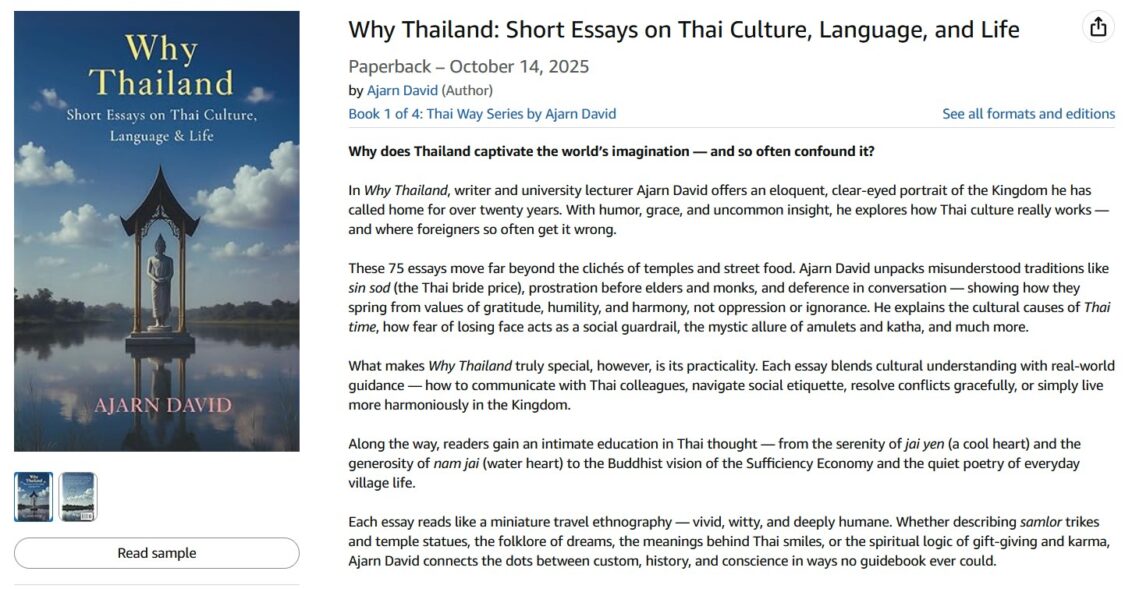
Now available from Ysaan Books (2025) in paperback, hardcover, and Kindle on Amazon: Why Thailand: Short Essays on Thai Culture, Language & Life by Ajarn David. It won’t tell you who you were; it will help you become who you came here to be.