Description
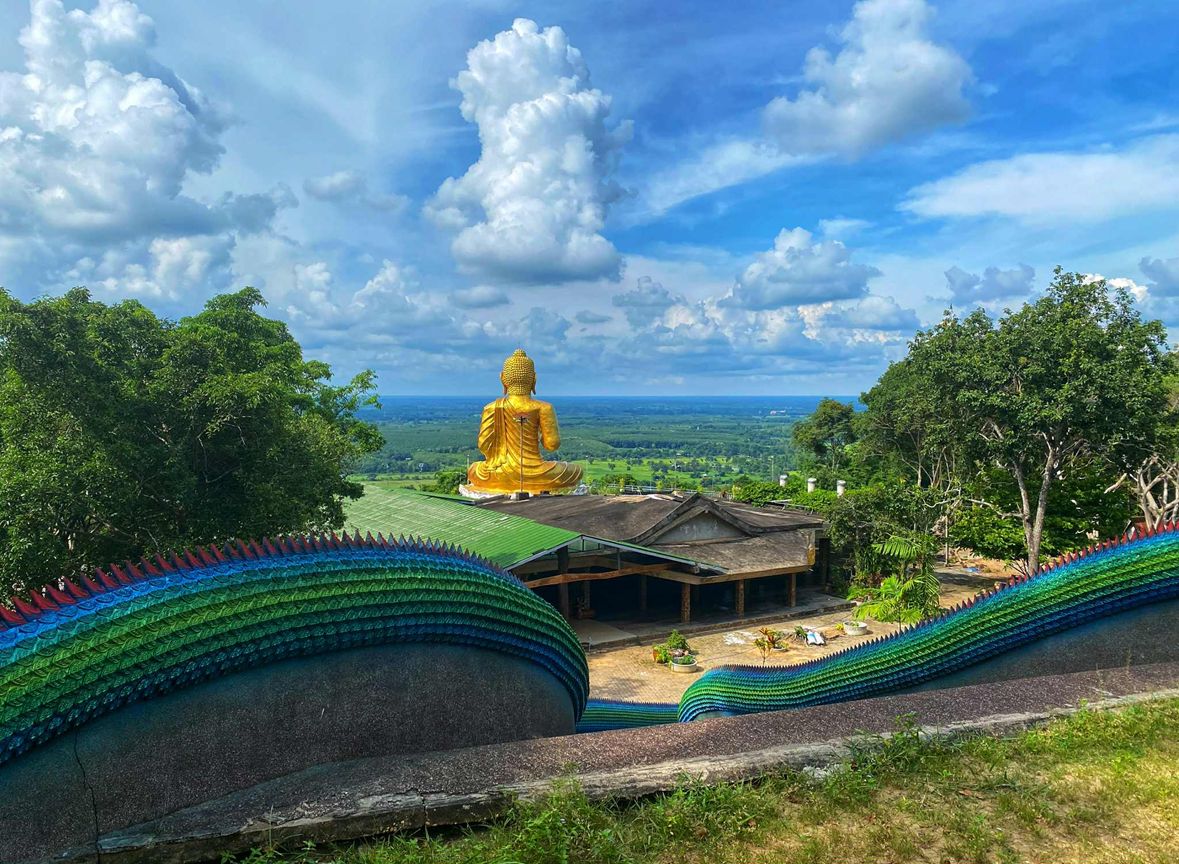
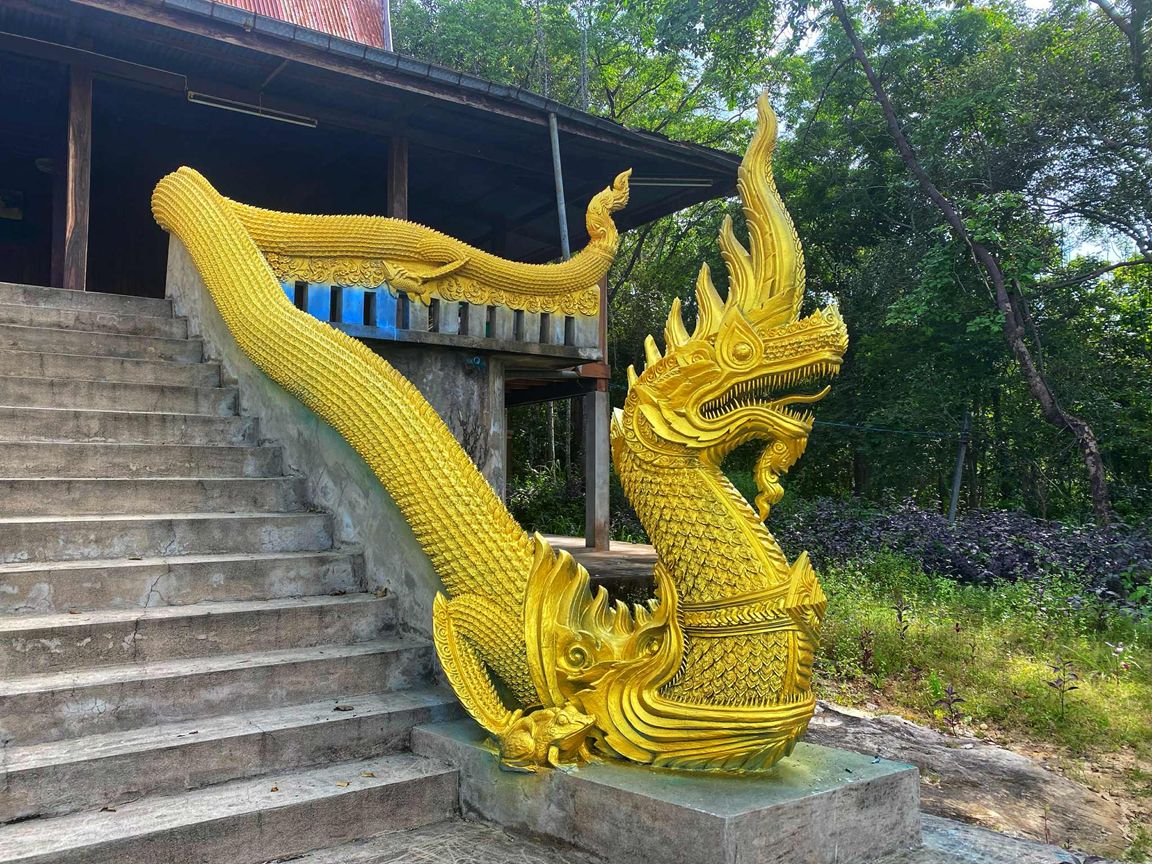
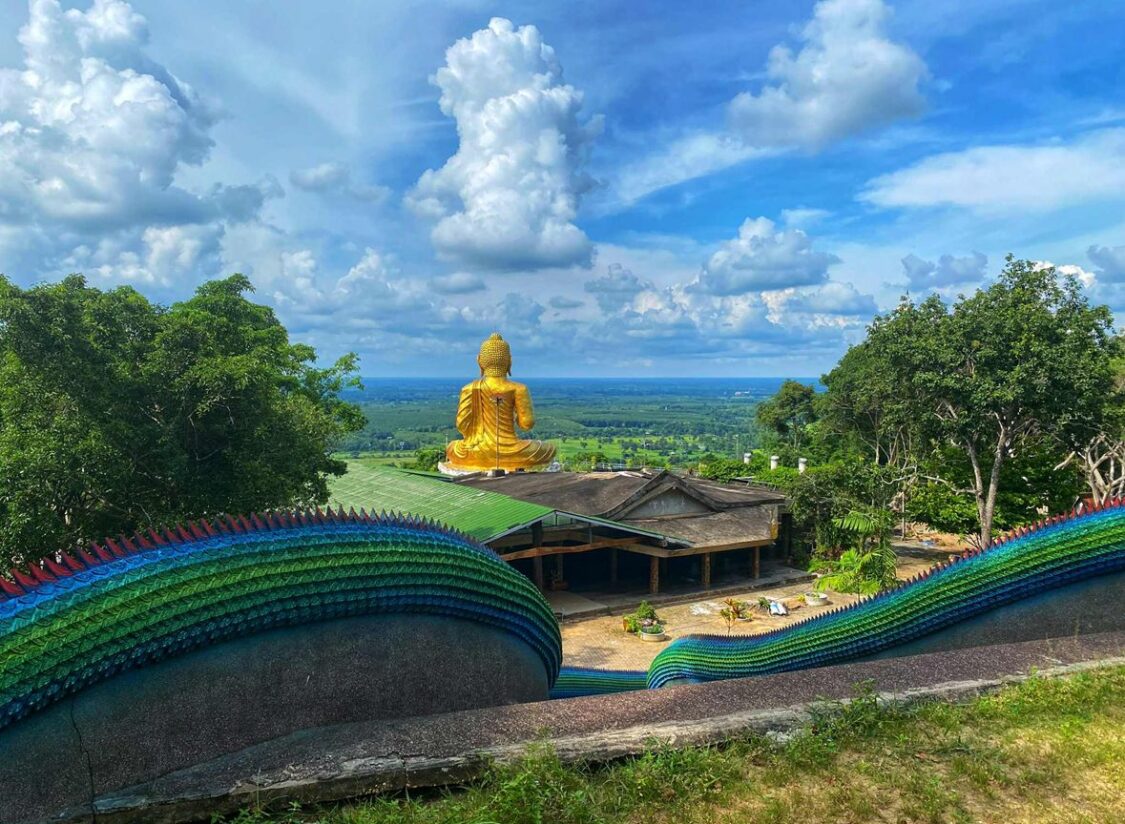
Hidden among the green hills of Khok Khiao (ค้อเขียว) of Amphur Waritchaphum (วาริชภูมิ) in Northwest Sakon Nakhon is the ancient temple of Wat Tham Phra Phuttha Saiyat (วัดถ้ำพระพุทธไสยาสน์), which in earlier times was called Wat Tham Phra Thong (วัดถ้ำพระทอง) — the Cave of the Golden Buddha.
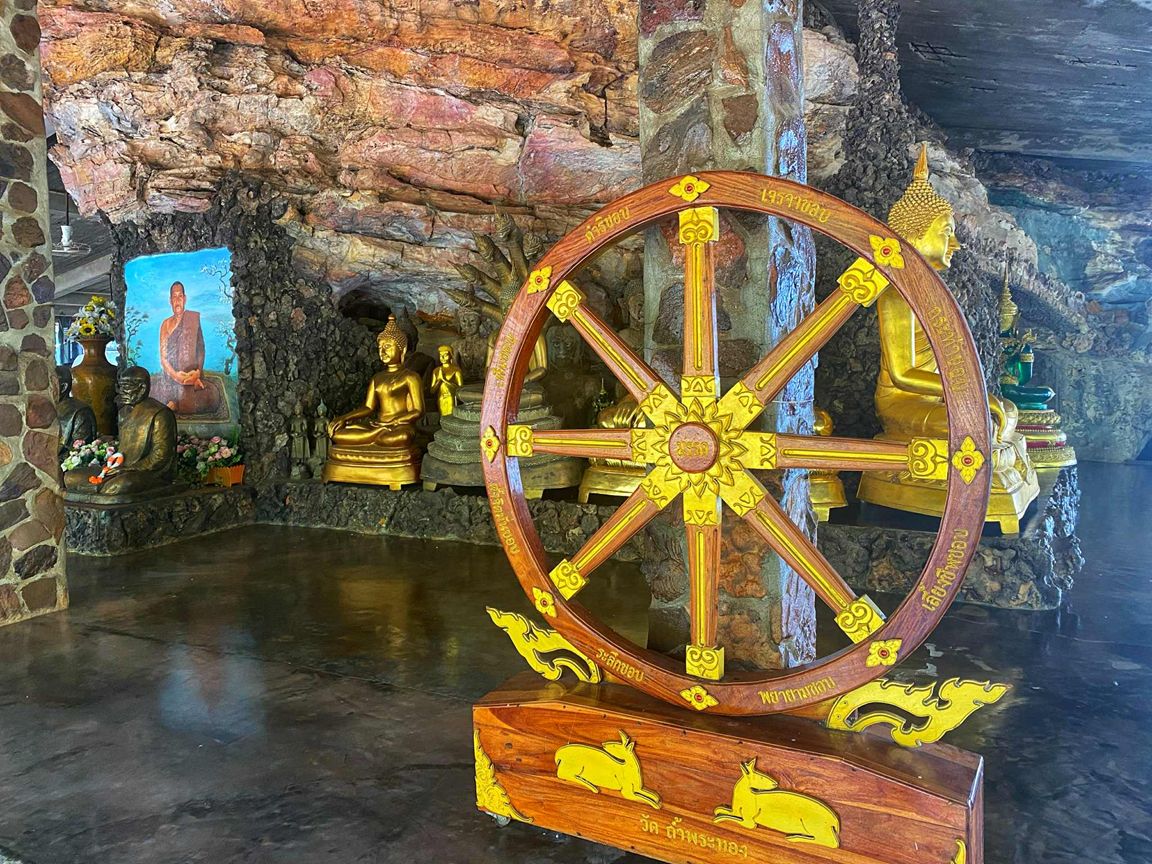
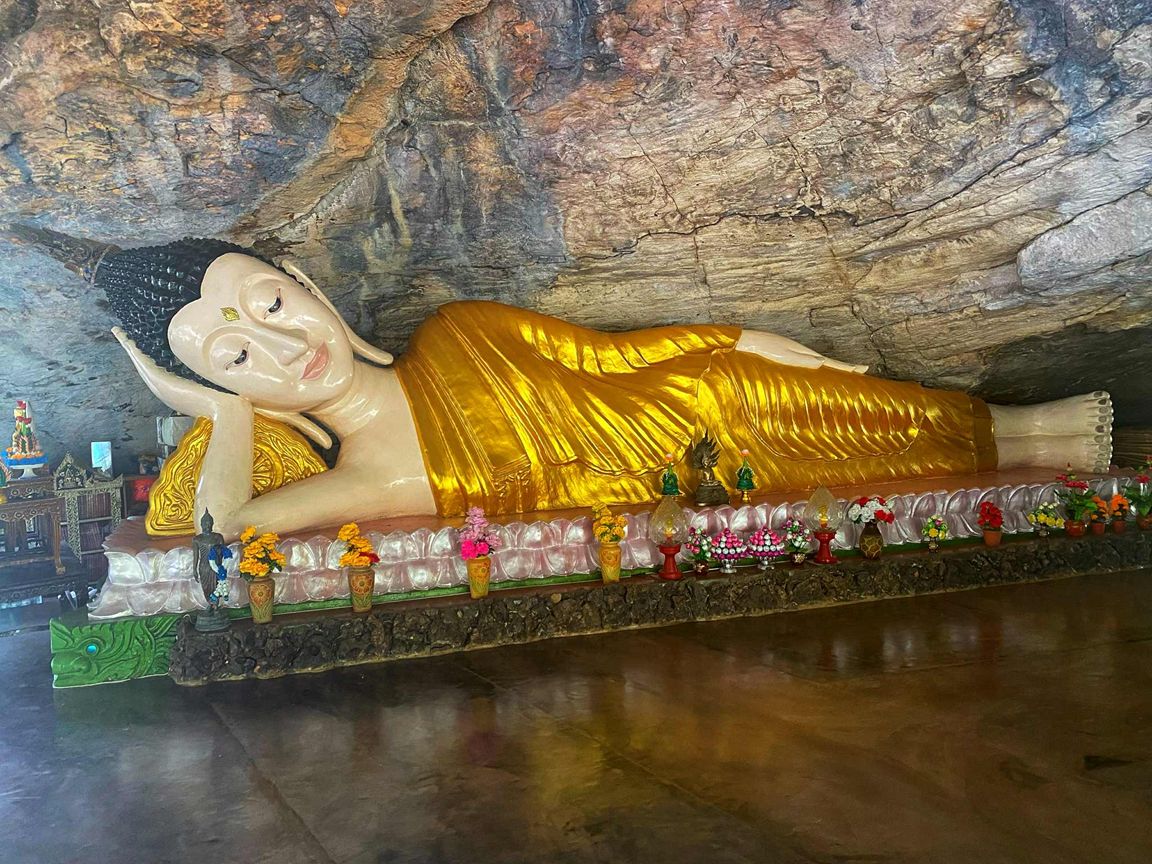
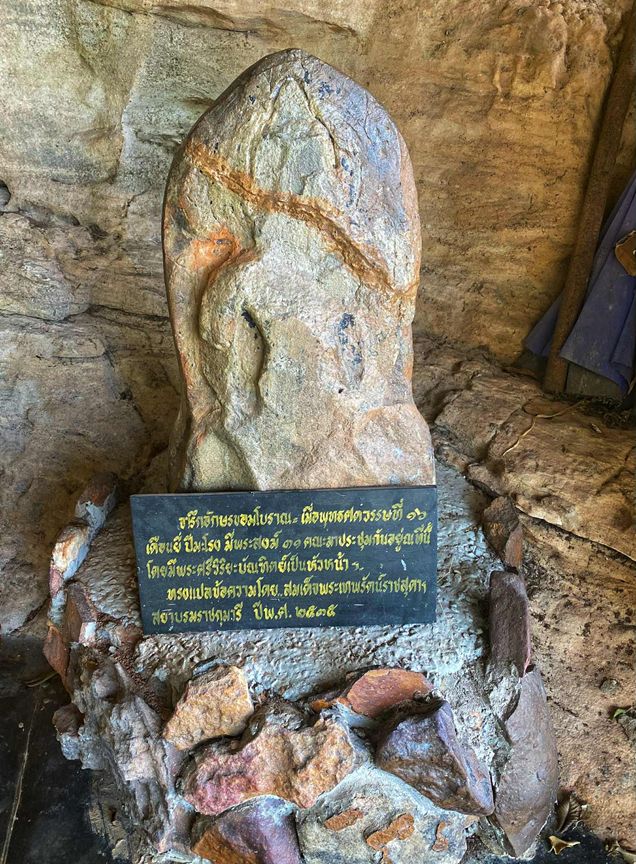
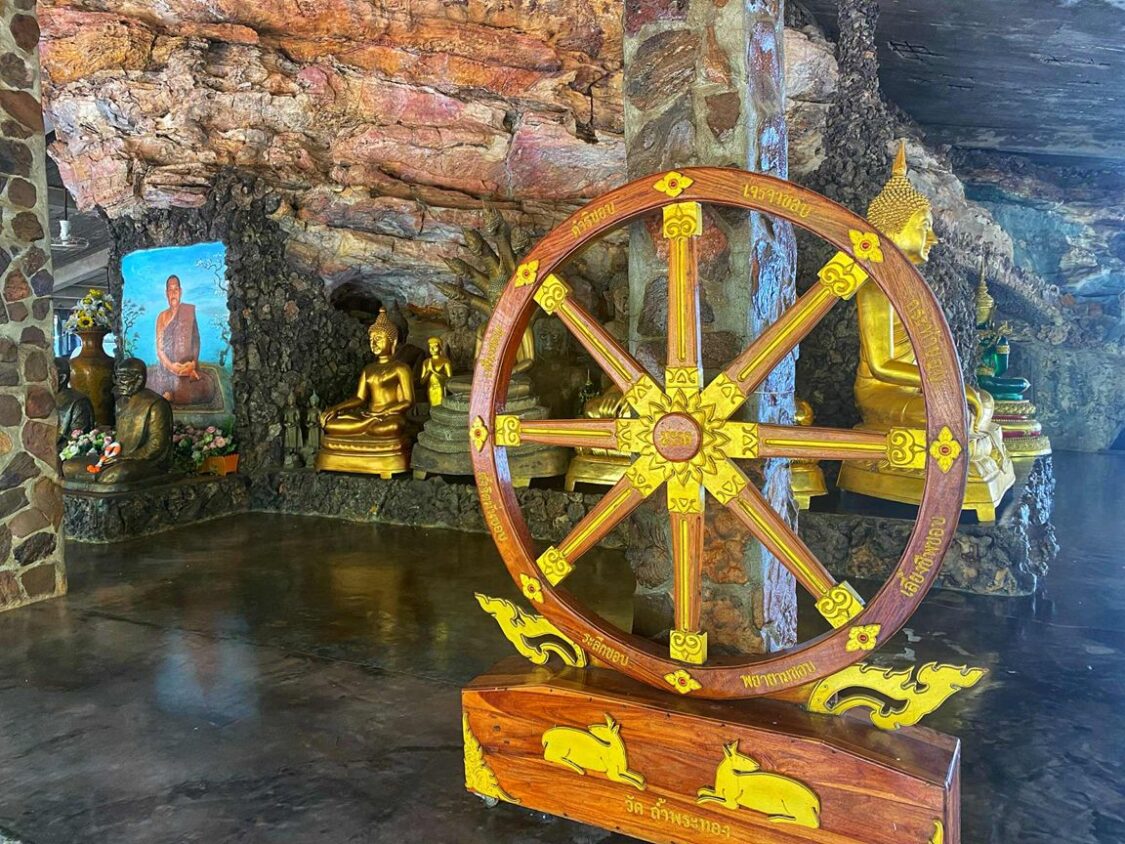
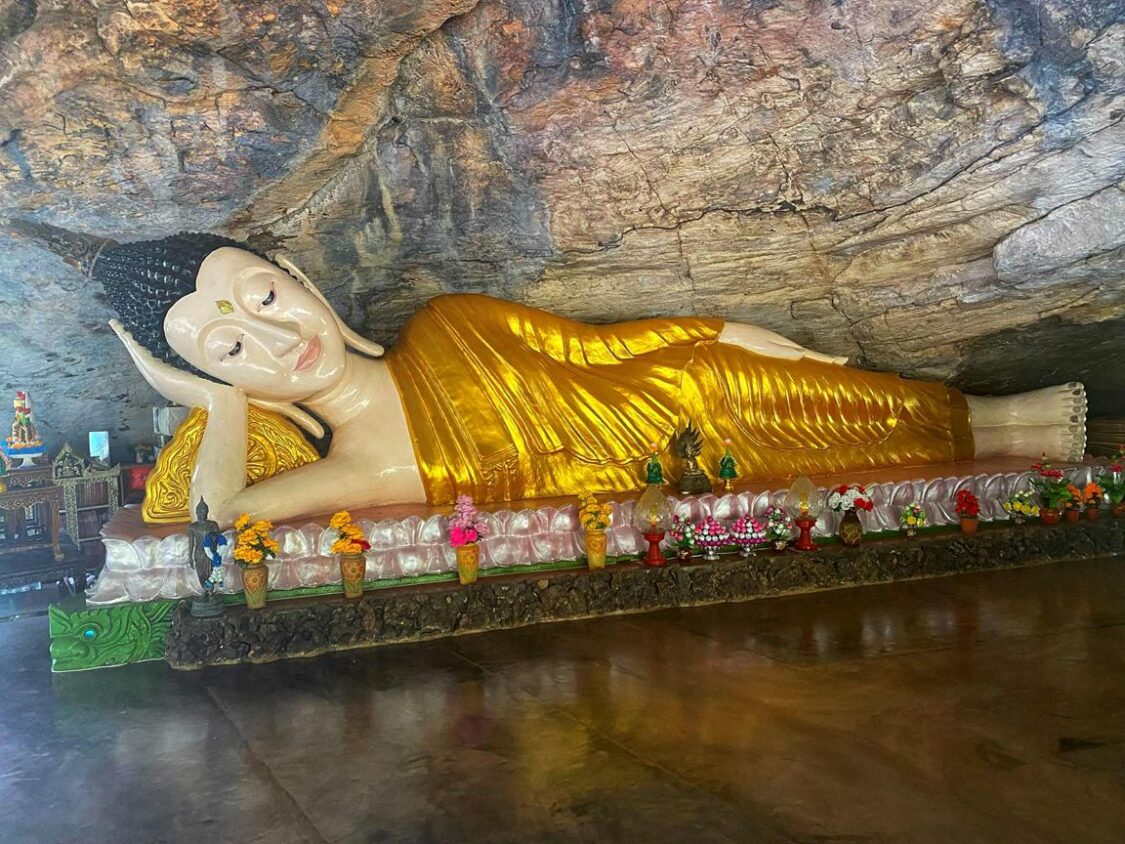
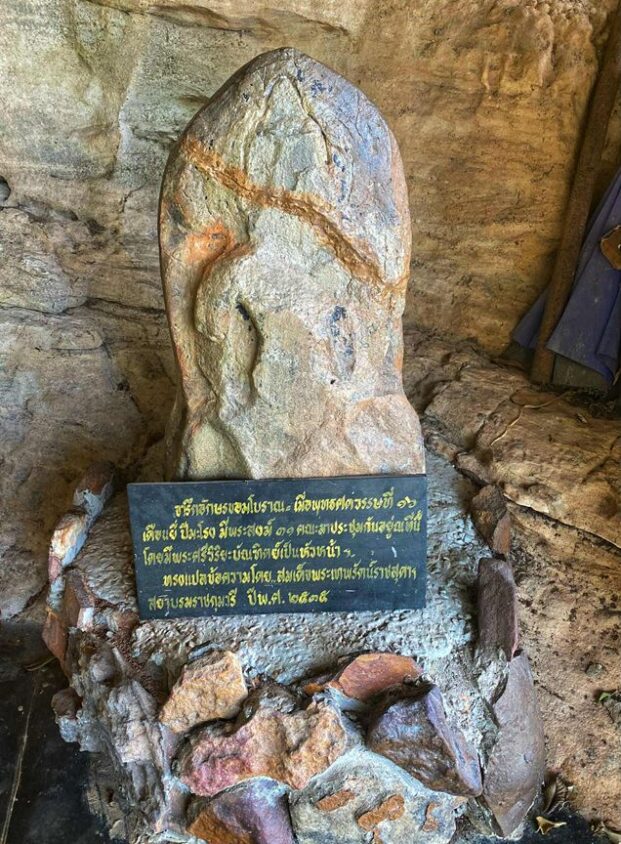
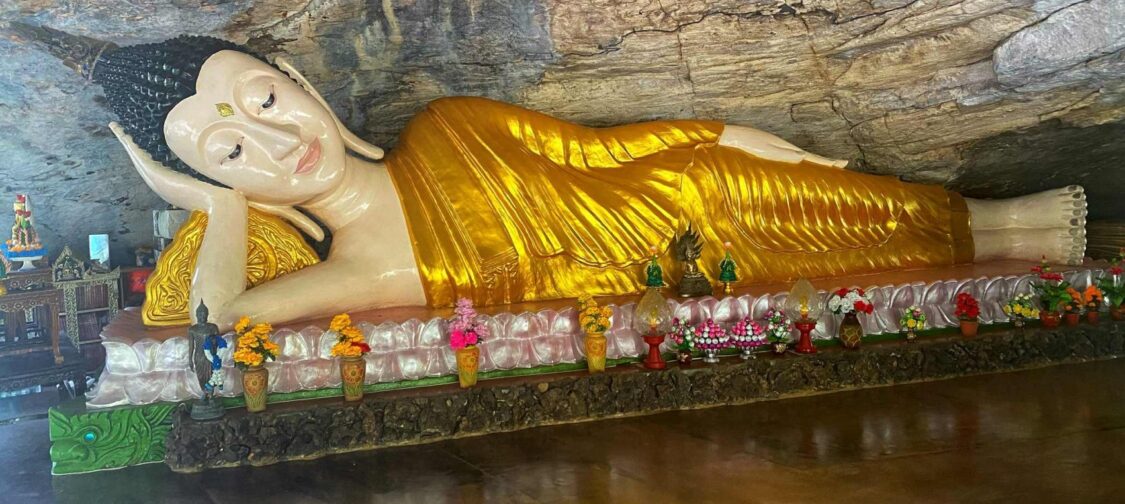
The old name came from the treasures once kept here: Buddha images made of gold, silver, and bronze (which are now long gone). The temple clings to the side of Phu Pha Thong (ภูผาทอง), part of the Phu Phan (ภูพาน) mountain range, where a natural cave was transformed into a sanctuary that still contains traces of its past — an ancient stone Buddha carved into the cave wall, a weathered inscription in Khmer script, and the great reclining Buddha that now defines the temple.
The cave itself was once lined with stone Buddhas and even paintings, though most have disappeared. What remains is a single carved image and an inscription, deciphered to tell of a gathering here, centuries ago, of thirty-one monastic groups under the leadership of a master named Sri Wiriya Bandit.
For generations, the temple was also tied to the rhythm of farming life. Each year, during Visakha Bucha (วันวิสาขบูชา), villagers would climb the hill with flowers, incense, and scented water to bathe the sacred images. They prayed for rain, for fertile fields, for life to flourish. Even after the golden and silver Buddhas vanished, the ritual continued.
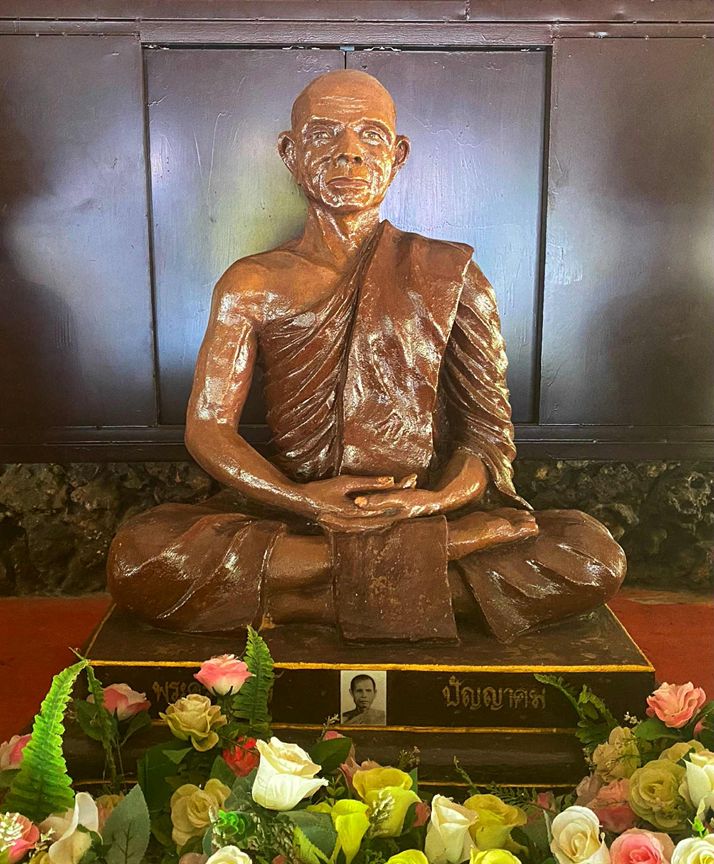
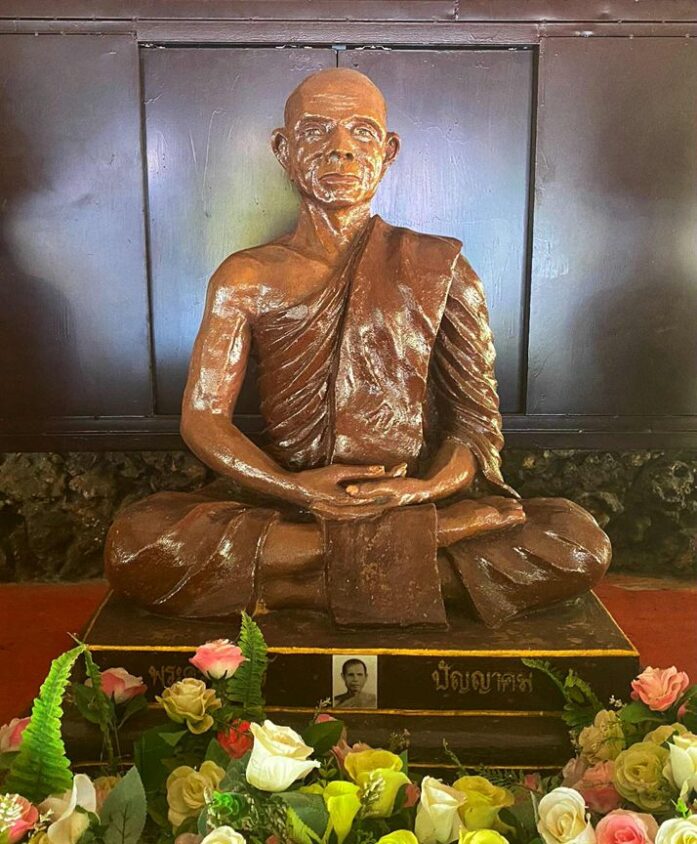
By the early 1900s, Wat Tham Phra Thong had become deserted, its treasures removed for safekeeping. It might have remained that way if not for the devotion of several monks who came later. In 1969, Phra Khru Kamphi Panyakom (พระครูคัมภีรปัญญาคม) chose the cave for meditation. With the villagers, he built a reservoir, restored the grounds, and in 1975 created a new symbol for the temple: the eight-meter-long reclining Buddha, Phra Phutthasaiyat (พระพุทธไสยาสน์).
A few years later, the temple found another guardian in Phra Ajahn Thongchan Phutthayano (พระอาจารย์ทองจันทร์ พุทฺธญาโณ), a disciple of the famous meditation teacher Luang Por Chah (หลวงพ่อชา สุภทฺโท). Ajahn Thongchan brought new life to the temple — not just by building halls and kutis, but by living with such discipline and simplicity that monks, novices, and laypeople were drawn to him. His presence transformed the cave into a true center of of meditation and dhamma practice.
Even royalty took notice. Her Royal Highness Princess Maha Chakri Sirindhorn (สมเด็จพระเทพรัตนราชสุดาฯ สยามบรมราชกุมารี) visited the temple twice, in 1993 and 1994, to pay her respects and see for herself the reclining Buddha, the stone inscription, and the quiet beauty of the place.
It was Ajahn Thongchan who gave the temple its present name — Wat Tham Phra Phuttha Saiyat — shifting the meaning away from lost treasures of gold and silver, and toward the reclining Buddha that rests peacefully within the cave.
Traveling from downtown Sakon Nakhon, it takes about 90 minutes to reach this mountain temple.