Speak Thai Naturally Without the Gymnastics
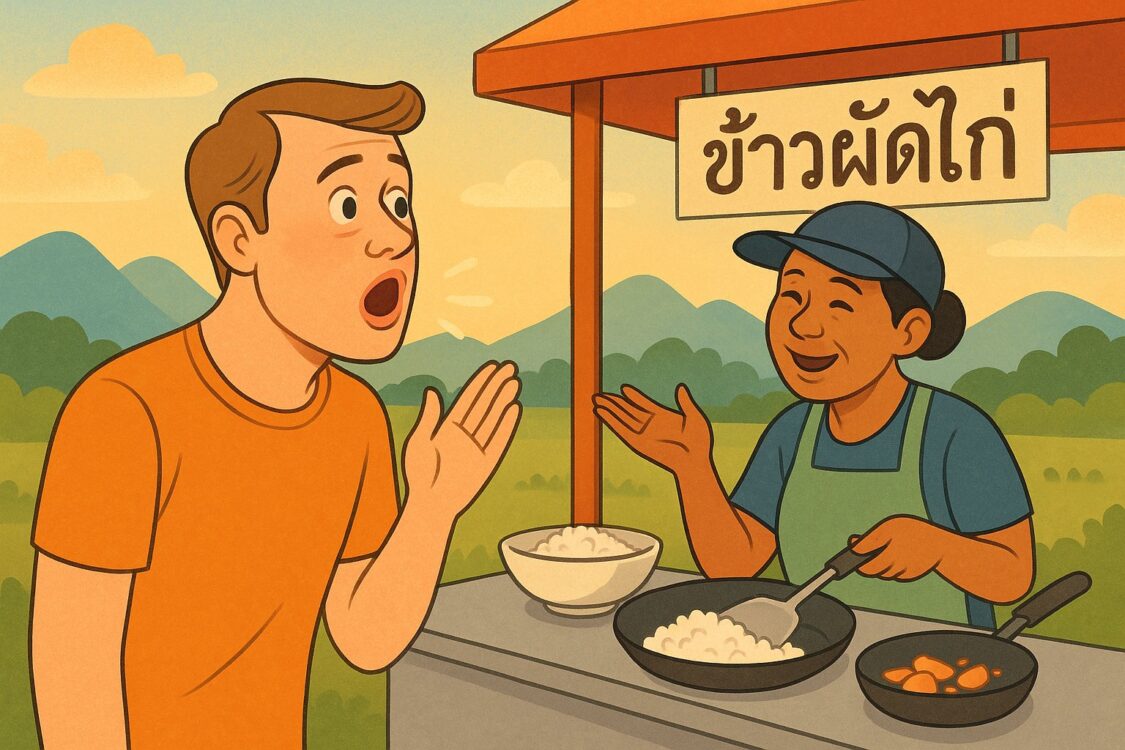
If you’ve ever tried to learn Thai and found your jaw cracking on the pronunciation, you’re not alone. One of the quirks of learning Thai as a foreigner (especially from traditional language schools or YouTube teachers) is that you’re often taught to over-enunciate vowel sounds and tones. And while clarity is important, too much theatricality can backfire.
Thai people aren’t laughing at you when you speak their language — they’re often laughing because your mouth is doing acrobatics that even Thai children don’t do. It’s endearing, sure, but also a sign that maybe it’s time to relax a little and rethink how you approach Thai pronunciation.
Where the Mouth Gymnastics Come From
Let’s set the scene: you’re watching first Thai lesson on YouTube. Your teacher says “Repeat after me: khâaaaaaoooo” (ข้าว – rice), drawing the vowel out, with cascading falling tone, like they’re serenading a rice grain. You respond like an eager student: “KHAAAAAAOOOOO,” cheeks puffed, jaw extended, eyes wide.
You think you nailed it.
Then, two days later, you try to order khâo pad gài (ข้าวผัดไก่ – chicken fried rice) at a street cart. The vendor blinks, stifles a giggle, and gives you a polite, slightly amused “อ่อ…ได้ค่ะ (Aw, dâai kâ).” You walk away with your fried rice and a creeping suspicion something was… off.
Spoiler: it was your face.
Why It Happens
- Fear of Being Misunderstood
Thai language learners think if they don’t exaggerate vowels and tones, they’ll be misunderstood. Ironically, it often makes your pronunciation less clear.
Pro tip: Don’t worry about tones so much as being certain you have the Thai words in the right order. If any word is out of place, it is very likely you will not be understood. - Teachers Who Teach Like Actors
Many Thai teachers go big on vowels to help you hear the difference — but they forget to tell you: “Don’t actually speak like this in the wild.” - The Copycat Trap
You’re doing exactly what you were told — copying the teacher. The problem is, they’re doing a demo, not showing you real-life use. And even if they do offer a more natural pronunciation in context, students tend to still focus on the slower, more enunciated, example. - Facial Muscle Memory
Once you start making “yâek” (แยก – separate) with an exaggerated jaw swing like you’re impersonating Jim Carrey or about to sneeze, it becomes muscle memory — and those habits are hard to shake.
Tips to Ditch the Gymnastics and Speak Thai Like a Real Human
- Watch Regular Thai People, Not Just Language Instructors
Vloggers, news clips, even Thai TikTokers. Pay attention to how little they move their mouths. No wide “aaahs” like they’re at the dentist. It’s all smooth, subtle, and relaxed. They look pretty much the same as you do when speaking English.
Read the Full and Newly Edited Version of This Essay
in Why Thailand: Short Essays on Thai Culture, Language, and Life

BUY ON AMAZON BUY IN THAILAND

- How I Wrote “Rak Sakon Nakhon”: A Thai Song for the Road Home - September 12, 2026
- Easy Thai Songs to Sing & Learn for Karaoke - September 5, 2026
- Reframe Your Brain for Thai Learning - April 18, 2026