A New Guidebook to Thai Culture & Life in Thailand
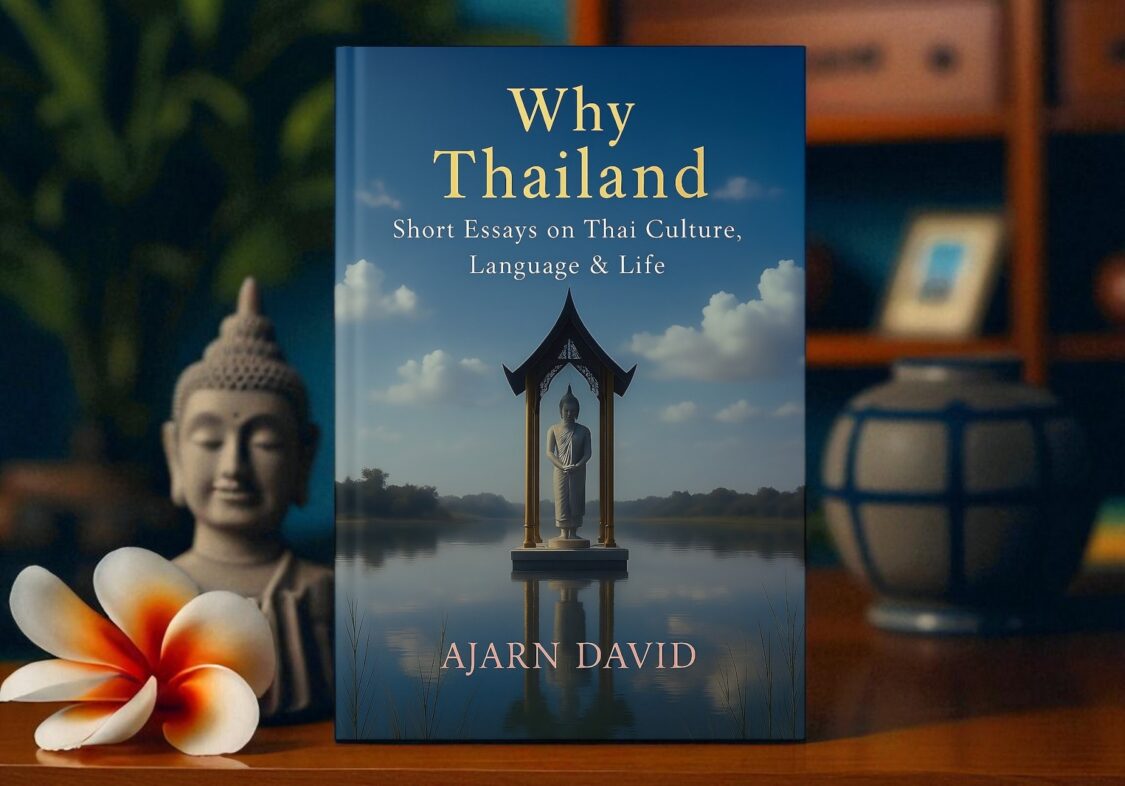
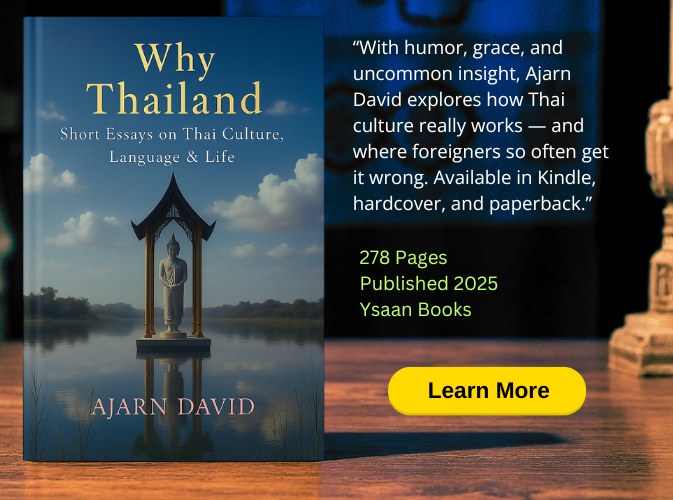
I would like to announce the publication of my new book, Why Thailand: Short Essays on Thai Culture, Language, and Life. Regular readers of this blog will recognize the 75 essays in this Thai guidebook as first published here. However, the new versions have been carefully edited and arranged into a cohesive and compelling narrative.
The articles on this blog are often written very quickly, without too much attention to the best possible word choice or grammatical flow. In addition, they are written with SEO (Search Engine Optimization) in mind, which can occasionally add repetition and other elements that would be edited out for print publication.
So, even if you’ve read the essays that appear in Why Thailand before, I believe you’ll find the new versions fresh and enjoyable. Moreover, many of the essays in the book no longer appear on MySakonNakhon.com in their entirety, but only in excerpt form from the unedited originals.
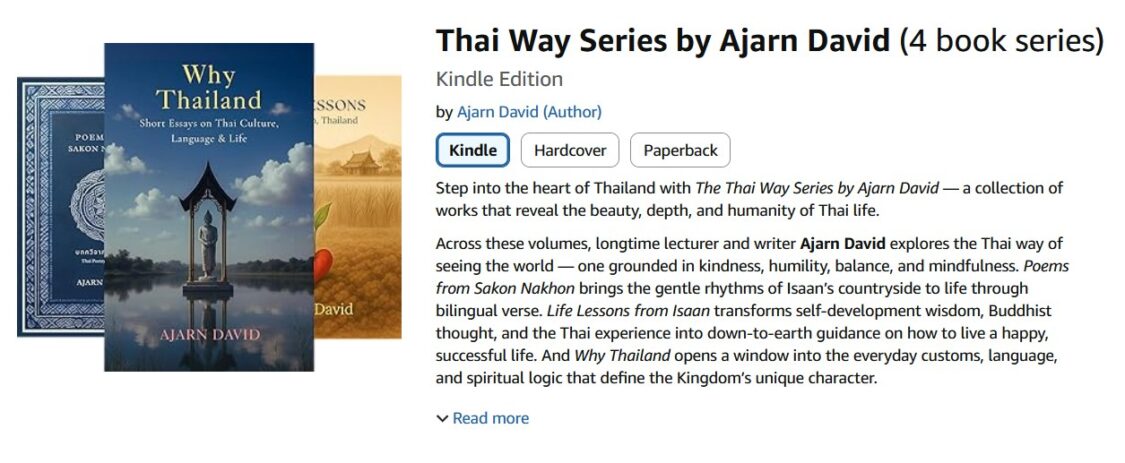
Thai Titles from Ysaan Books
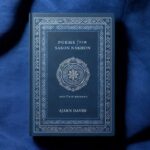
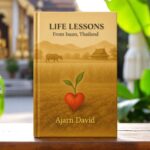
Why Thailand was published by Ysaan Books in Sakon Nakhon, like my previous two titles, Poems from Sakon Nakhon (Thai Poetry in English), and Life Lessons from Isaan, Thailand. These three works now make up the Thai Way Series — books that reveal the Thai way of life I’ve been fortunate enough to experience over the past 23 years in Thailand.
The series also includes my textbook Discover Thai Culture Through Poetry: Cross-Cultural Poems for Creative Learning — a book that uses selected poetry from Poems from Sakon Nakhon to explore the wisdom and beauty of Thai culture.
With Christmas approaching, Why Thailand: Short Essays on Thai Culture, Language, and Life would make a wonderful gift for anyone who loves Thailand or is thinking about moving here to work or retire. Yes, I’m admittedly biased. 😉 But I can say with confidence that the material in this book is unlike anything found in typical Thailand guidebooks, novels, or memoirs.
I trust readers will find the book both enlightening and helpful in explaining many aspects of Thai culture that can seem confounding to some, yet reveal themselves as thoughtful and caring to others. Thai language learners will be happy to know that I’ve interspersed the essays with Thai text and transliterations to aid their study of the language. The Thai script versions of names and titles will also assist those who want to conduct deeper research into the topics I discuss.
You can find Why Thailand in paperback, hardcover, and Kindle editions at Thai Guidebooks on Amazon.
Within Thailand, you can purchase the book at Thailand Books on Shopee.
Why Thailand: Sample Page Image and Excerpt
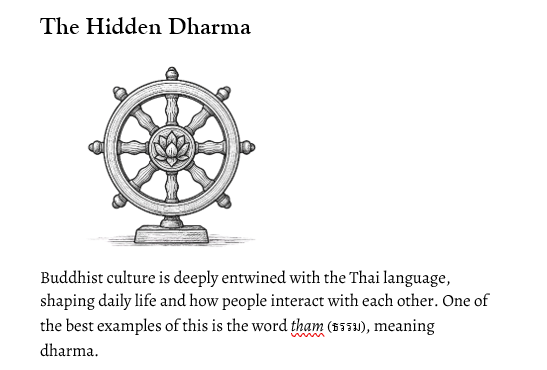
Each of the 75 essay titles in Why Thailand is accompanied by a simple black and white drawing as seen above.
Thai Culture Guide – Chapter List
Here is a list of the 75 chapters in the Why Thailand guidebook of essays, with a brief description.
1. Why Thailand?
Explores why Thailand attracts those seeking peace, freedom, and balance, highlighting cultural traits like greng jai, mai pen rai, and jai yen as keys to harmony.
2. The Art of Being Greng Jai
Explains the Thai value of greng jai (considerate restraint), how it governs social interaction, and why foreigners often misunderstand it.
3. Saving Face
A guide to Thailand’s face-saving culture, its benefits for harmony, and how it influences communication, progress, and self-control.
4. The “Farang” Question
Discusses the term farang (foreigner), its linguistic and cultural roots, and why Westerners should not be offended by its use.
5. Understanding “Jai”
Explores the Thai concept of jai (heart, mind, spirit), showing how it shapes emotional intelligence, empathy, and holistic thinking.
6. The Way of Thai Listening
Describes how Thai language links listening and feeling, promoting emotional sensitivity and empathy in communication.
7. The 5 by 5 Travel Itinerary
A cultural guide offering five daily travel tips — finding beauty, learning, trying new things, gratitude, and kindness — for a meaningful Thai adventure.
8. The Eightfold Path for Tourists
Applies the Buddha’s Eightfold Path to travel in Thailand, transforming tourism into a journey of mindfulness and self-discovery.
9. Greeting Monks
Provides practical advice on how to properly greet and interact with Buddhist monks respectfully in Thailand.
10. Luang Pu Chaiyong Analayo
Profiles a revered forest monk of Sakon Nakhon, his secluded temple life, teachings, and mystical experiences.
11. Luang Pu Fan Acharo
Tells the story of Ajarn Fan Acharo, his teachings on heart-based wisdom, and his friendship with King Bhumibol the Great.
12. The Bulletproof Isaan Monk
Recounts the legendary story of Phra Ajarn Wan Uttamo, who survived a barrage of bullets unharmed, symbolizing the power of spiritual faith.
13. Sakon Nakhon: A Spiritual Mecca
Explains why Sakon Nakhon is considered Thailand’s spiritual heart, home of the Thai Forest Tradition and powerful legends.
14. Christianity & Thai Language
Reflects on how the Thai language beautifully conveys Christian virtues like love, humility, and compassion.
15. Buddhist Prayer Beads
A guide to the use of Buddhist “mala” beads in Thailand for meditation, protection, and faith.
16. Phra Sivali
Tells of the monk Phra Sivali, considered a symbol of abundance and fortune, often invoked for blessings of prosperity.
17. Phra Pidta
Explains the iconography and symbolism of Phra Pidta statues — Buddhas covering their eyes to signify protection and inner focus.
18. Good Luck Mantras
A guide to sacred chants and kata mantras for blessings, prosperity, and spiritual protection in Thai life.
19. Thai Mind Power
Examines a mystical Thai practice where mental focus, meditation, and thought energy are used as tools for transformation.
20. Thai Love Spells
Delves into the history of Thai love charms (sàyaan rak) and amulets, and their connection to human desire and karma.
21. Buddhist Marriage Advice
A cultural guide to using Buddhist teachings to manage love, patience, and harmony within Thai marriages.
22. Thai Dowry Defended
Clarifies the cultural meaning of the Thai sin sod (dowry), showing it as a gesture of respect rather than materialism.
23. Thai Family Values
Highlights Thailand’s strong sense of family loyalty, gratitude to parents, and the social bonds that define Thai culture.
24. Isaan Village Houses
A guide to traditional Isaan wooden homes, their symbolism, simplicity, and connection to community life.
25. A Culture of Respect
Discusses the Thai respect system, hierarchy, and the graceful manners that sustain harmony in social relationships.
26. The Wai & Its Meaning
Explains the wai gesture — palms pressed together—and its many layers of meaning beyond a simple greeting.
27. Nam Jai: Water Heart
Explores nam jai, the generous “water heart,” expressing spontaneous kindness and selfless giving.
28. The Thai Personality
Analyzes Thai temperament — patient, cheerful, and polite — rooted in Buddhist values and social harmony.
29. The Sound of Love
Reflects on the Thai word for love, emphasizing tone, subtlety, and emotional warmth.
30. Sanuk Culture
Explains the Thai pursuit of sanuk (fun) and why joy is considered an essential part of living well.
31. The Hidden Dharma
A guide to the spiritual wisdom embedded in everyday Thai customs and festivals.
32. A Righteous Thai King
Praises King Bhumibol’s moral example, compassion, and leadership as aligned with Buddhist virtues.
33. Karma in Thailand
Explores how Thais understand and apply karma to explain fortune, relationships, and social behavior.
34. An Epic Thai Love Story
Retells a classic Thai story that reveals lessons about loyalty, fate, and the karmic power of love.
35. The Thai Spirit World
A cultural guide to the world of phi (spirits) and animism that coexists with Thai Buddhism.
36. Phi Fa Ghost Healers
Explains the ancient phi fa healing rituals of Isaan villages, combining music, dance, and spirit invocation.
37. Kon Mee Sanay
Describes people said to possess natural charm or magnetism (sanay), and why to be on your guard.
38. Suay vs. Narak
Distinguishes between suay (beautiful) and narak (cute), revealing how Thais view beauty and personality.
39. The Mia Noi Question
Explores the cultural, historical, and moral aspects of Thailand’s tradition of secondary wives or mistresses.
40. The Prostration Debate
Examines differing opinions about deep bowing in Thai religion and society, balancing respect with equality.
41. Fear of Criticism?
Analyzes whether politeness in Thai culture discourages honest critique and innovation.
42. Unraveling Thai Time
A guide to the Thai sense of time — flexible, relational, and relaxed — and its deeper cultural logic.
43. A Monk’s Daily Life
Details the routines of Thai monks, from dawn alms rounds to evening meditation, as models of discipline.
44. The Role of Temples
Discusses Thai temples (wat) as centers of community, charity, education, and spiritual growth.
45. Making Merit
Explains the concept of tham boon (making merit) as a moral economy of generosity and mindfulness.
46. Visiting a Temple Like a Mystic
A guide to visiting temples in Thailand with a mystical spiritual awareness.
47. Wan Khao Phansa
Describes the Buddhist Lent Day when monks retreat for the rains and focus on meditation.
48. Wan Ok Phansa
Covers the festival marking the end of Buddhist Lent, and how it is celebrated.
49. Visakha Bucha Day
Explains the holiest Buddhist holiday commemorating the Buddha’s birth, enlightenment, and death.
50. The Namo Tassa Chant
Interprets the meaning and purpose of the Namo Tassa Bhagavato chant, honoring the Buddha.
51. Dreams in Thailand
Explores Thai beliefs about prophetic dreams, omens, and their connection to the subconscious.
52. Dying Well in Thailand
A guide to Buddhist teachings on death, preparation, and the Thai approach to dying peacefully.
53. A Thai Vision of Hell
Describes Buddhist depictions of hell (narok) as moral allegories rather than eternal punishment.
54. What Remains When You’re Gone
Reflects on impermanence and legacy, and how Thais remember the dead through merit and memory.
55. Why Learn Thai?
Encourages foreigners to learn Thai for cognitive development and a deeper understanding of Thai culture.
56. How Men vs. Women Speak Thai
Examines gendered language differences in Thai speech and what they reveal about cultural roles.
57. Speak Thai Naturally
Gives practical tips for foreigners to sound more natural and polite in spoken Thai.
58. Foreigners Who Can Speak Thai
Highlights expats who master the Thai language, earning respect and insight into Thai society.
59. Ladyboys & Buddhism
Explores the cultural acceptance of kathoey (ladyboys) within Thai Buddhism and society.
60. Is Thailand Dangerous?
Debunks misconceptions about danger in Thailand, stressing its safety and low crime culture.
61. Is Driving in Thailand Dangerous?
Debunks Thailand’s reputation for having very dangerous roads, breaking down the statistics.
62. Riding a Motorbike in Thailand
A guide to motorbike risk awareness, and cultural norms for two-wheeled travel.
63. The Iconic Isaan Samlor
Celebrates the traditional samlor (three-wheeled bicycle taxi) as a symbol of Isaan heritage.
64. Sato & Yoo
Describes local Isaan drinking culture, rice wine (sato), and social rituals of camaraderie.
65. Betel Nuts & Leaves
Examines the tradition of chewing betel nut and its role in rural Thai culture.
66. Isaan: Thailand’s Culinary Capital
A guide to the bold flavors and communal spirit of Isaan cuisine, from sticky rice to papaya salad.
67. How to Speak Isaan
Introduces key differences between Thai and the Isaan dialect, offering simple vocabulary and phrases.
68. Thailish Language Tips
Provides practical advice on common English-Thai language mix-ups and pronunciation quirks.
69. Thai Smiles & Their Meanings
A cultural guide to the many types of Thai smiles and what each conveys emotionally or socially.
70. The Gift of Khwan
Explains the concept of khwan (spirit essence) and its role in Thai well-being and rituals.
Preserving Thai Culture & Beauty
71. Solving Littering
Proposes culturally sensitive ways to address Thailand’s littering problem through education and empathy.
72. Less English, More Thai
Argues for strengthening Thai language education to preserve identity amid globalization.
73. A Competency-Based Thai Curriculum
Outlines ideas for reforming Thai education to focus on practical, creative, and cultural competencies.
74. Cultural Soft Power
Examines how Thailand can project its values internationally through art, tourism, and education.
75. Sufficiency Economy
Concludes with a guide to King Bhumibol’s sufficiency economy philosophy — balancing progress with the moderation, ethics, and sustainability that define Thai culture.

- How I Wrote “Rak Sakon Nakhon”: A Thai Song for the Road Home - September 12, 2026
- Easy Thai Songs to Sing & Learn for Karaoke - September 5, 2026
- Reframe Your Brain for Thai Learning - April 18, 2026