Yoo vs. Sato vs. Lao Khao (Traditional Thai Spirits)
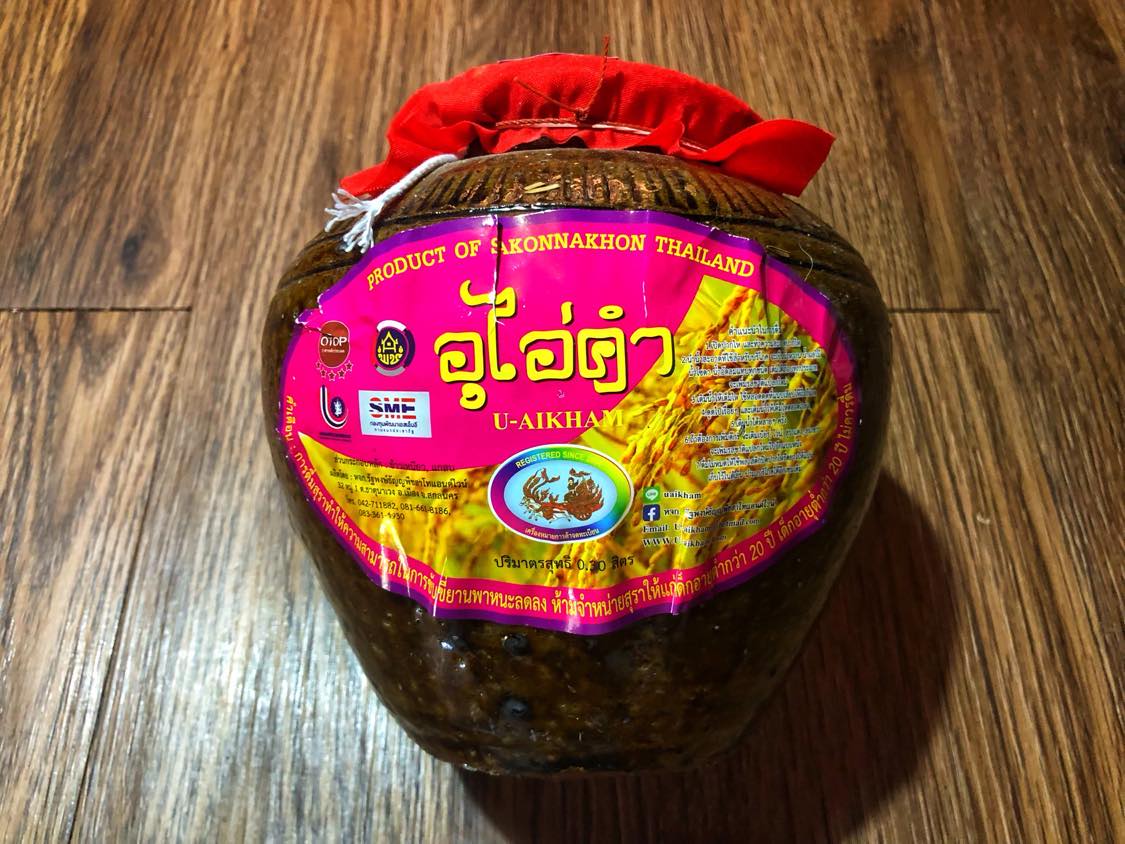
We’ve discussed what sato is — the homemade rice wine popular in Isaan. Today let’s learn about its kindred spirit yoo (อุ) or lao yoo (เหล้าอุ), which is sometimes incorrectly referred to as lao khao (เหล้าขาว) or white whiskey.
Yoo is different from sato (rice wine), as it has a different preparation and fermentation process. With yoo, sticky rice husks and flour balls are allowed to ferment outside a clay pot for a day or two (to get the fermentation process going) before being placed inside the pot, and sealed tightly with an ash cement top.
There are many different recipes for the flour balls used in making this traditional Thai alcohol. These recipes are closely guarded secrets by master yoo makers. But some of the ingredients that can be ground up to make the flour balls include sticky rice, galangal root, dried chili, sugarcane, betel nut root, coconut root, and yeast.
Yoo fermentation continues inside the clay jar for about two weeks. When the cement top is taken off, you’ll find moist husks inside the jar that give off a distinct liquor aroma that is quite pleasant and aromatic. The jar has not been filled with liquid, so you now need to add water or something else, such as beer, rice wine, or lao khao (for a really strong rice whiskey).
If you add water, you’ll get a drink similar in alcohol content to sato (4-8%). However, many Thais decide to fill the pot with lao khao (60-80% white spirits), because it enhances the flavor, and men believe it is a virility booster. This is why yoo is often referred to as lao yoo, because lao (spirits) have been added.

Traditional Thai Drinking Contest
Members of the Phu Thai tribe in Sakon Nakhon and Nakhon Phanom are recognized as being some of the best yoo makers in Thailand, as yoo has long played a role in their traditions. At celebrations, Phu Thai men and women will sometimes engage in a drinking contest called an “Elephant Clash” (ชนช้าง).
Read the Full and Newly Edited Version of This Essay
in Why Thailand: Short Essays on Thai Culture, Language, and Life
BUY ON AMAZON BUY IN THAILAND

- How I Wrote “Rak Sakon Nakhon”: A Thai Song for the Road Home - September 12, 2026
- Easy Thai Songs to Sing & Learn for Karaoke - September 5, 2026
- Reframe Your Brain for Thai Learning - April 18, 2026