How I Wrote “Rak Sakon Nakhon”: A Thai Song for the Road Home
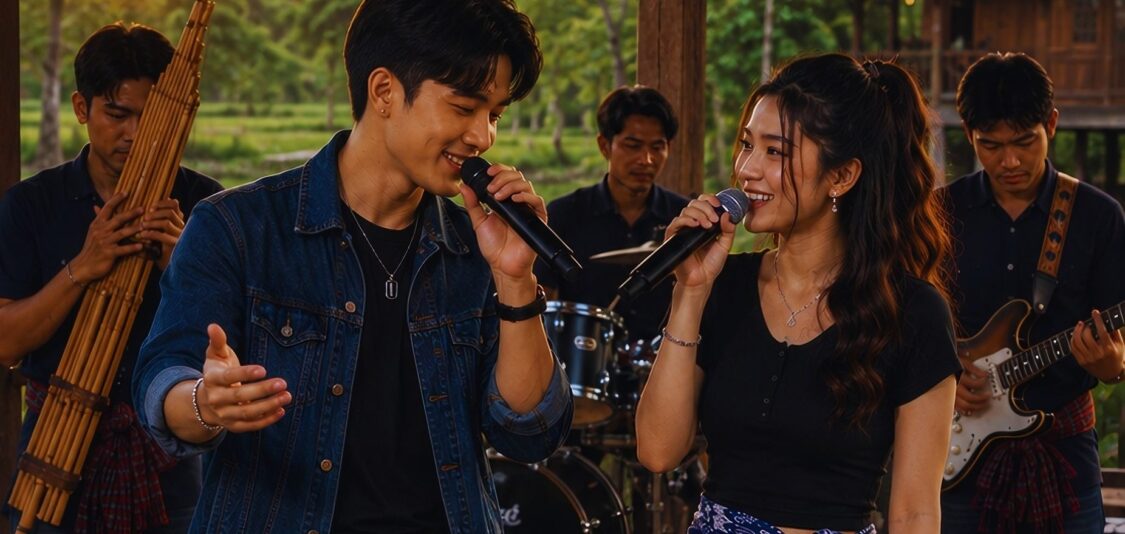
When I started putting together my first EP, Ysaan, I already knew one of the five songs had to be about Sakon Nakhon.
I’ve lived in Thailand for more than 24 years, and Sakon Nakhon has been my home for over 15 of them. I’d already written about the province in bilingual poetry — most directly in Poems from Sakon Nakhon — and through this website MySakonNakhon.com.
Those projects let me pay tribute to the province, but they reached a narrow audience: people who read poetry, and people already curious about traveling in the Northeast.
I wanted something that could travel further than that. I also wanted to give something back to the community that had become my adopted home. The song needed to welcome people who’d never heard of Sakon Nakhon, but it had to belong, first, to the people who already know it from the inside — something they could sing with pride, not just listen to.
That was the real challenge behind “Rak Sakon Nakhon” (รักสกลนคร): how do you introduce a place to strangers without turning it into a list of attractions, and how do you write for local people without shutting everyone else out?
Starting with “Country Roads”
I kept coming back to John Denver’s “Take Me Home, Country Roads” — not to rewrite it in a Thai setting, but to study the feeling it creates and figure out how to build something similar for people from Sakon Nakhon.
“Country Roads” has a quality I’ve always liked: it flows, but with a buoyant, slightly bumpy rhythm, like it’s moving along a road or a river. Lines like “Shenandoah River” and “Mountain Mama” are fun to sing before you’ve even thought about what they mean. The song paints with a wide brush — mountains, rivers, roads, home — and turns geography into longing.
I wanted some of that movement in “Rak Sakon Nakhon.” I wanted the words to sit easily in the mouth and a chorus people would remember after two or three listens. But I wanted to shift the perspective too.
Denver’s song is one person asking the road to carry him home. Mine would be a duet — an exchange of invitations, with a chorus a whole table, restaurant, bar, family gathering, or karaoke room could join in on.
I also wanted the song to live in two musical worlds at once. The songwriting leans Western pop, but the arrangement leaves room for Thai instruments to come through. Neither tradition is dressed up as the other — they just meet, the same way English and Thai meet in the lyrics.
“Almost Home” to Isaan
The emotional center of the song is a repeated phrase: ใกล้ถึงบ้าน — “almost home.”
That phrase carries real weight in Sakon Nakhon. Many people born here leave the province for work or university and come back when they can — jobs, school calendars, and distance permitting, with New Year and Songkran being the big returns.
Home isn’t only a fixed place here. It’s also an approach: the landscape you recognize appearing outside the window, the sense that a long trip is almost done, the feeling of moving back toward family and an earlier version of yourself.
The chorus tries to hold that moment:
สกลนคร ใกล้ถึงบ้าน (Sakon Nakhon, Glai Teung Baan)
คิดถึงจัง ชีวิตชาวบ้าน (Kit Teung Jang, Cheewit Chao Baan)
รักอีสาน ทุ่งนาสวยงาม (Rak Isaan, Tung-Naa Suay-Gnaam)
รักสกล ใกล้ถึงบ้าน (Rak Sakon, Glai Teung Baan)
Sakon Nakhon, almost home. Missing the life of ordinary people. Loving Isaan and its rice fields. Loving Sakon as home comes into view.
I kept the language plain because the feeling itself is direct. Nostalgia doesn’t always show up as a complicated thought. Sometimes it’s just a rice field going by, a road you recognize, or the simple thought: we’re nearly there.
Specific Places, But Not a Sakon Nakhon Tourist List
“Country Roads” gave me a model for the emotional sweep of a place song, but I wanted the verses of “Rak Sakon Nakhon” to get more specific than that. The lyrics move through well-known symbols of the province alongside places and activities you won’t find in a quick tourist rundown:
Let’s ride through the Mountains of ภูพาน (Phu Phan)
Let’s go shopping for ผ้าสีคราม (Phaa See Khraam)
Let’s sit by the waters of หนองหาร (Nong Han)
Let’s go home to เมืองสามธรรม (Meuang Saam Tham)
Phu Phan sets the physical landscape. Indigo cloth — pha see khram — stands for a living craft, not a souvenir. Nong Han brings the song back to the water the city grew up around. These are all major features of Sakon Nakhon, but I wrote them as things to do together: ride, shop, sit, go home.
The next verse goes deeper into local knowledge:
Let’s climb the steps of พระธาตุภูเพ็ก (Phra That Phu Phek)
Let’s wai อาจารย์ฝั้น at วัดถ้ำขาม (Ajarn Fan at Wat Tham Kham)
Let’s swim the falls of ปรีชาสุขสันต์ (Preecha Suksan)
Let’s hunt เห็ดเผาะ at ภูผายล (Het Phor at Phu Pha Yon)
I didn’t just want to name Phra That Phu Phek — we climb its long staircase. At Wat Tham Kham, we pay respects to Ajarn Fan Acharo, one of the revered forest monks tied to the province; the temple is remembered as a place where he practiced and lived.
Then the mood turns from sacred to playful and physical: swimming at Preecha Suksan waterfall, hunting for hed phor, the seasonal earthstar mushrooms people gather in the forest once the early rains bring them out across the Phu Phan and Phu Pha Yon ranges.
The last verse pulls together spirituality, celebration, family, and food:
Let’s see the stars at บ้านท่าแร่ (Ban Tha Rae)
Let’s make merit with พ่อ and แม่ (Phaw and Mae)
Let’s eat steak at โพนยางคำ (Phon Yang Kham)
Let’s กินส้มตำ by the pond (Gin Som Tam)
The stars at Ban Tha Rae are the Christmas Star Parade, tied to a Catholic community that’s been established there for more than a century — not generic holiday scenery, but a real thread in Sakon Nakhon’s religious and cultural life.
From there the song shifts to Buddhist merit-making with one’s parents, then to two unmistakably local pleasures: Phon Yang Kham beef, a recognized product of the province, and som tam by the water.
I chose these places because they mean something to me, and because I knew they’d land for local Thai listeners too. Together they read more like a memory map than an itinerary — mountains to cloth, lake to temple, waterfall to forest, stars to parents, steak to som tam.
Sakon Nakhon comes through as something you experience with other people, not something you look at.
What Mueang Sam Tham Means
One phrase had to carry an outsized amount of meaning: เมืองสามธรรม, Mueang Sam Tham — the City of Three Dharmas.
The three parts are ธรรมะ (dhamma — spiritual teaching and practice), ธรรมชาติ (thammachat — nature), and วัฒนธรรม (watthanatham — culture). Local tourism initiatives sometimes present these as three separate themes, built around Buddhist sites, the natural world of Nong Han, and cultural communities like Tha Rae. But in Sakon Nakhon they don’t stay in their lanes — they keep shaping each other.
The province’s spiritual history is tied to its terrain. The forests and mountains of Phu Phan drew monks who wanted solitude and space for walking meditation and disciplined practice.
Ajarn Mun Bhuridatta, a central figure in the Thai forest tradition, spent important years in the region and died here. Ajarn Fan developed the temple Wat Pa Udom Somporn, and was close friends with King Bhumibol the Great. The mountain isn’t just scenery — it’s part of the province’s spiritual record.
Culture grows out of that meeting of belief, land, and daily work: temple life and merit-making, Tha Rae’s Catholic traditions, food gathered from the forest, the knowledge it takes to grow, dye, weave, and design indigo cloth. Mueang Sam Tham gave me a compact way to hold all of that in one phrase in the song. It’s not a slogan I borrowed — it’s how the province already understands itself.
Why the Verses Are English and the Chorus Is Thai
This split was both practical and emotional. I wanted listeners outside Thailand to follow the journey through the verses, so English carries the invitations and introduces the places. But if international listeners were ever going to sing a part of the song in Thai, the chorus was the place for it — it repeats, and repetition is how you learn a phrase in a language you don’t speak.
I picked words that are short and rhythmically clear, easy for a non-Thai speaker to pick up, but that carry a deeper weight for Thai listeners who know what it’s like to leave Sakon Nakhon and come back.
I considered the reverse — Thai verses, English chorus — but it didn’t work. English lets an outside listener step into the landscape. Thai is where the song comes home.
Why It Had to Be a Duet
Male and female voices trade lines:
Let’s ride…
Let’s go shopping…
Let’s sit…
Let’s go home…
That back-and-forth turns the song into an invitation between two people instead of a solo declaration, and it fits how I imagined the song living outside headphones — two people trading lines, friends waiting for their favorite reference, everyone joining in once the chorus hits.
That shaped how I wrote it: every line had to be complete enough to hand off to the other singer, while the verse still moved forward as a whole. Then the chorus widens the frame — two voices become a room full of them.
Writing Lyrics, Melody, and Rhythm Together, on Acoustic Guitar
There wasn’t a single moment when the whole song came together. I wrote the words, the melody, and the rhythm side by side, on acoustic guitar, adjusting each one against the others as I went.
Working out chords and strumming patterns on the guitar shaped which lines I kept and which I cut — a place name might carry real meaning and still fight the melody, while another with less obvious significance turned out to be a joy to sing.
I was listening for the same thing I love in “Country Roads”: forward flow with small rhythmic bumps that make a line satisfying to sing. Thai place names gave me a lot of those bumps. The back-and-forth of English framing and Thai nouns gives the verses their own motion, while the chorus’s repeated sounds become the hook.
That’s also why the lyrics are selective. A song about Sakon Nakhon could name dozens more temples, villages, foods, and traditions. But a lyric isn’t an encyclopedia — every reference had to earn its place by doing several jobs at once: meaning, sound, rhythm, and emotional movement.
The Same Process, a Different Kind of Song
“Rak Sakon Nakhon” is about something different from the other songs on the Ysaan EP, but the underlying process is the same one I use everywhere.
In “Mai Rak Mae Kha,” I built a small story out of concrete behavior: a man keeps going back to a noodle shop while denying he’s in love with the woman who runs it, and his refrain only flips once the shop closes for good.
In “Kit Teung Theu,” repetition and the shift between Thai and English carry a feeling that’s hard to say outright. In “Mai Rak Lai Jai,” spare verses and a short Thai refrain turn emotional conflict into chorus of heartbreak that resonates with many who have loved and lost.
The subjects are different — unrecognized love, longing, betrayal, attachment to home — but I’m asking myself the same questions each time. What’s the clearest image? Which language should carry which part of the feeling? What can I leave out? What will a phrase mean the second or third time it comes back? And, most importantly: will people actually want to sing it?
In “Rak Sakon Nakhon,” the concrete details aren’t a noodle shop or a private argument — they’re a lake, a staircase, indigo cloth, mushrooms in the forest, Christmas stars, parents, a meal by the water. Add them up and they tell a story about belonging.
Where AI Fit Into the Finished Recording
I used AI tools in producing the finished song and audio, and I think it matters to be honest about where that fits and where it doesn’t.
No AI tool decided Sakon Nakhon needed a song, or that its emotional center should be the journey home. It didn’t bring my twenty-four years in Thailand — including more than 15 in Sakon Nakhon — to the project.
It didn’t pick ใกล้ถึงบ้าน as the hook, connect migration to holiday homecomings, balance famous landmarks against quieter local experiences, or decide English should invite outsiders in while Thai carries the chorus home.
It didn’t decide two singers should trade lines so a personal journey could turn communal. All of that came from living with the place, thinking about who’d hear it, studying how another place song works, writing on guitar, testing how the words sounded out loud, and figuring out what version of Sakon Nakhon I actually wanted the song to hold.
What AI-assisted production did was help turn all of that groundwork into a finished performance. I still had to listen and judge whether it worked — whether the bilingual lines flowed, whether the duet felt like an invitation, whether the rhythm was enjoyable to sing, and whether the blend of Western songwriting and Thai sounds felt cohesive.
The technology is part of how the recording was made. It is not the reason the song exists.
A Song Sakon Nakhon Can Sing Back
My first purpose was to make a tribute to Sakon Nakhon. I also hoped to introduce the province to listeners elsewhere, including people outside Thailand who might be hearing names such as Phu Phan, Nong Han, Tha Rae, and Phon Yang Kham for the first time.
But the order matters. Before the song could introduce Sakon Nakhon to anyone else, it had to feel true to people from here. I wanted them to recognize more than locations. I wanted them to recognize the movement between leaving and returning, reverence and pleasure, forest and city, family and friends — the many small experiences that make a place home.
That is why the song does not say simply, “I love Sakon Nakhon.” It asks people to ride, shop, sit, climb, wai, swim, search, make merit, eat, and sing together. Love of place becomes a series of shared actions. And every time the chorus returns, the distance closes a little more:
รักสกล ใกล้ถึงบ้าน
Love Sakon. We’re almost home.
- How I Wrote “Rak Sakon Nakhon”: A Thai Song for the Road Home - September 12, 2026
- Easy Thai Songs to Sing & Learn for Karaoke - September 5, 2026
- Reframe Your Brain for Thai Learning - April 18, 2026