Christianity & Thai Language
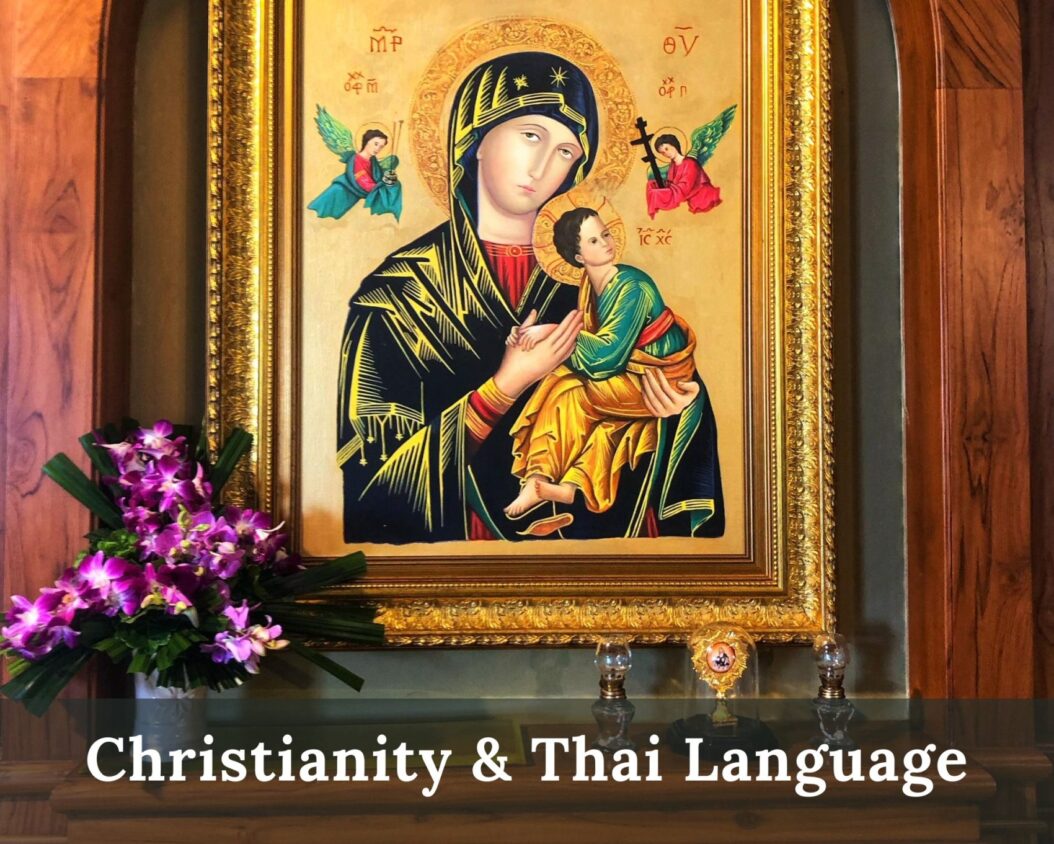
I visited a small Catholic church near my village the other day. It was the middle of the afternoon, and I was expecting an empty chapel to meditate and say a few prayers. But there was an old Thai woman sitting in one of the pews, a rosary in hand, praying the Hail Mary in Thai:
wantha maria, piam duai phra-hatsathan, phra-jao sathit gap thaan, thaan dai rap phra-phon ying kwaa satrii dai dai (วันทามารีอา เปี่ยมด้วยพระหรรษทาน พระเจ้าสถิตกับท่าน ท่านได้รับพระพรยิ่งกว่าสตรีใดๆ)
Listening to the soft and lyrical beauty of the Hail Mary spoken in Thai, it occurred to me that the Thai language may be one of the best for conveying the teachings of Jesus of Nazareth — with his tender yet challenging teachings that speak not to the head alone, but to the heart.
The Christian Nature of “Jai” Words
In Thai, the head and the heart are inseparable. The word jai (ใจ) encompasses both the heart and the mind, the emotional and the rational, the seat of feeling and the seat of intention. There’s no need to separate “thinking” from “feeling,” or “belief” from “compassion.” They are united.
This integrated view of human experience aligns beautifully with the teachings of Jesus, who never spoke of love (rak – รัก), loving-kindness (metta – เมตตา), compassion (garuna – กรุณา), or righteousness (tham – ธรรม), as merely matters of intellect or sentiment — but as whole-of-being pursuits.
Thai’s expansive vocabulary of “heart words” further bridges Christ’s teachings. Consider the phrase jai yen (ใจเย็น), “cool heart,” meaning to remain calm, patient, and non-reactive. Could there be a better linguistic embodiment of Jesus’s call to “turn the other cheek”?
Then there’s nam jai (น้ำใจ), “water of the heart,” which refers to generosity that flows naturally, like water from the heart. This is not just charity. It’s grace in action — a flowing outward of love from the depths of one’s soul. Try finding an English equivalent with the same poetic precision.
There is, indeed, a wide range of jai compound words that illuminate a Christ-like character. There’s thus no need for theological jargon when Thai already categorizes the conditions of the human spirit with such clarity in single words.
Thai’s tonal and condensed structure also lends itself to the wisdom teachings of Jesus. The language’s reliance on tone and context allows a single sentence to carry layers of meaning, echoing the parable style of Christ’s speech — where a few simple words unlock profound truths.
Thai spirituality doesn’t rely on heavy philosophical constructions or formal religious terms. It speaks plainly, but with depth — a perfect match for teachings that are accessible to the poor in spirit, the childlike, and the humble.
Thailand & The Sermon on the Mount
The Sermon on the Mount, with its emphasis on meekness, peacemaking, humility, and inward transformation, is uniquely suited to a language like Thai — one that values indirectness, gentleness, and harmony.
Thai people are famously non-confrontational. They choose words with care to maintain khwam greng jai (ความเกรงใจ), a consideration for others’ feelings — a respectful awareness of how one’s actions affect others.
Read the Full and Newly Edited Version of This Essay
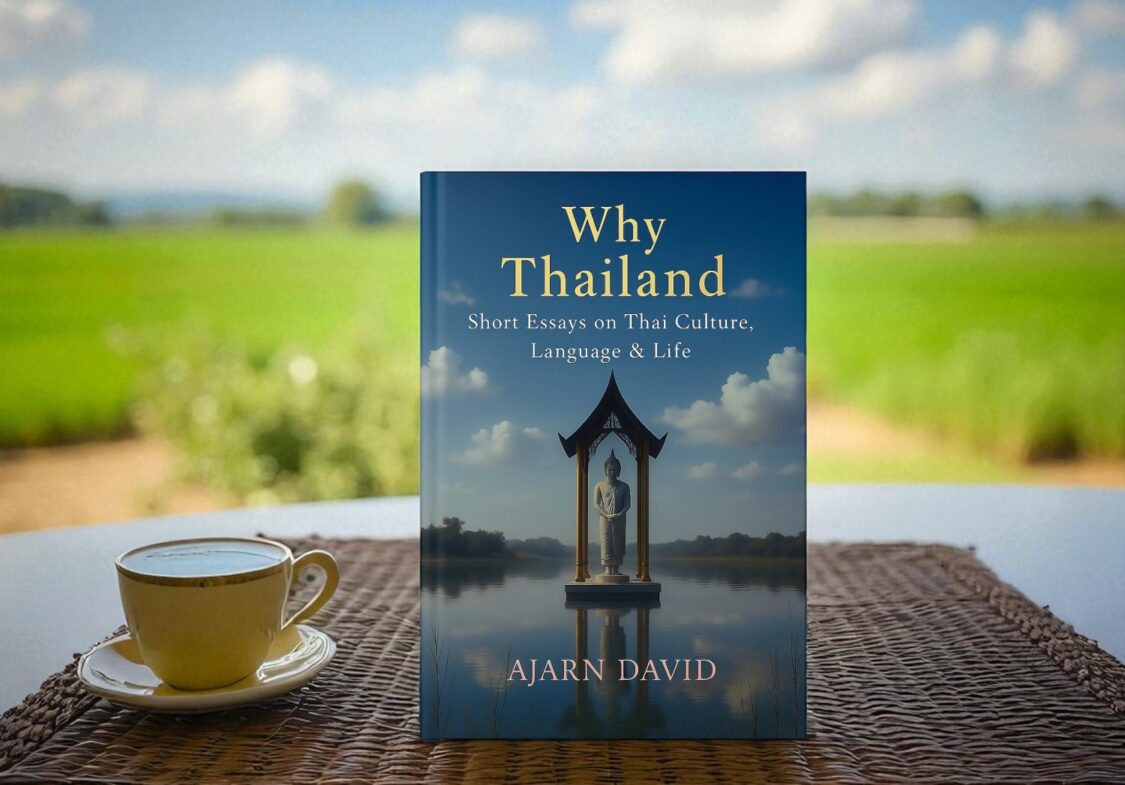
in Why Thailand: Short Essays on Thai Culture, Language, and Life
BUY ON AMAZON BUY IN THAILAND

- How I Wrote “Rak Sakon Nakhon”: A Thai Song for the Road Home - September 12, 2026
- Easy Thai Songs to Sing & Learn for Karaoke - September 5, 2026
- Reframe Your Brain for Thai Learning - April 18, 2026