Paya Yae: A Thai Lizard Landmark in Sakon Nakhon
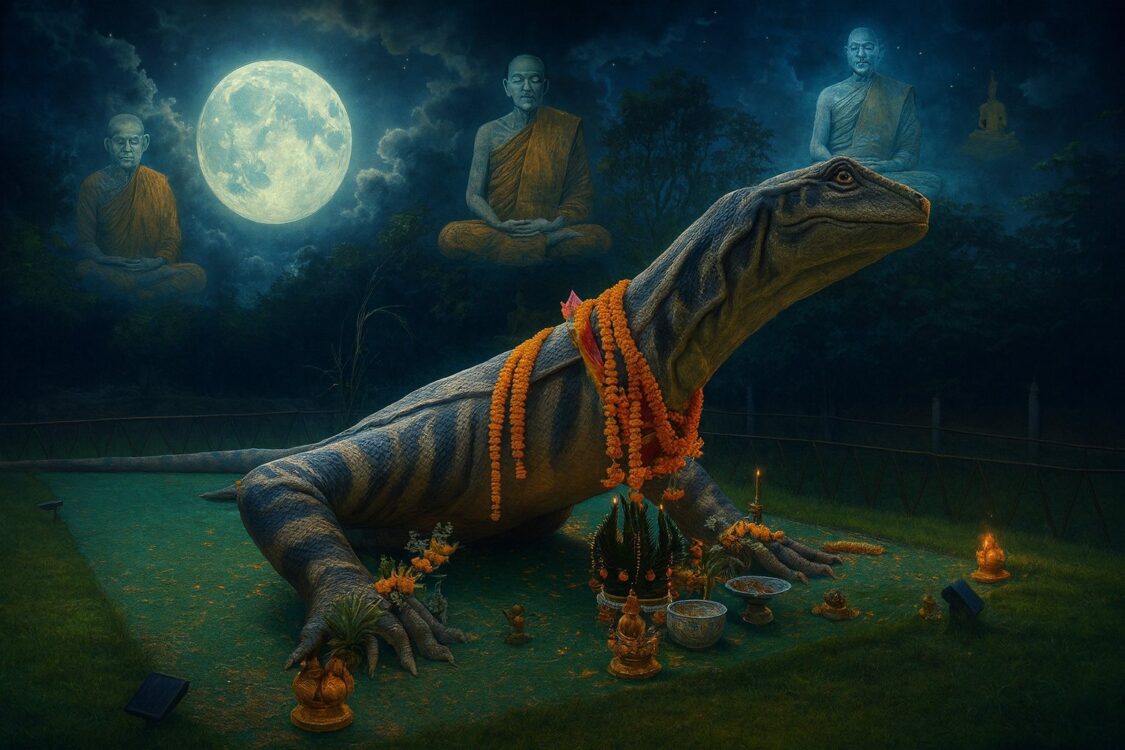
In the village of Ban Pracha Suksan (บ้านประชาสุขสันต์), at the foot of the Phu Phan Mountains, a new landmark was built through the collaboration of local residents and educators at Sakon Nakhon Rajabhat University.
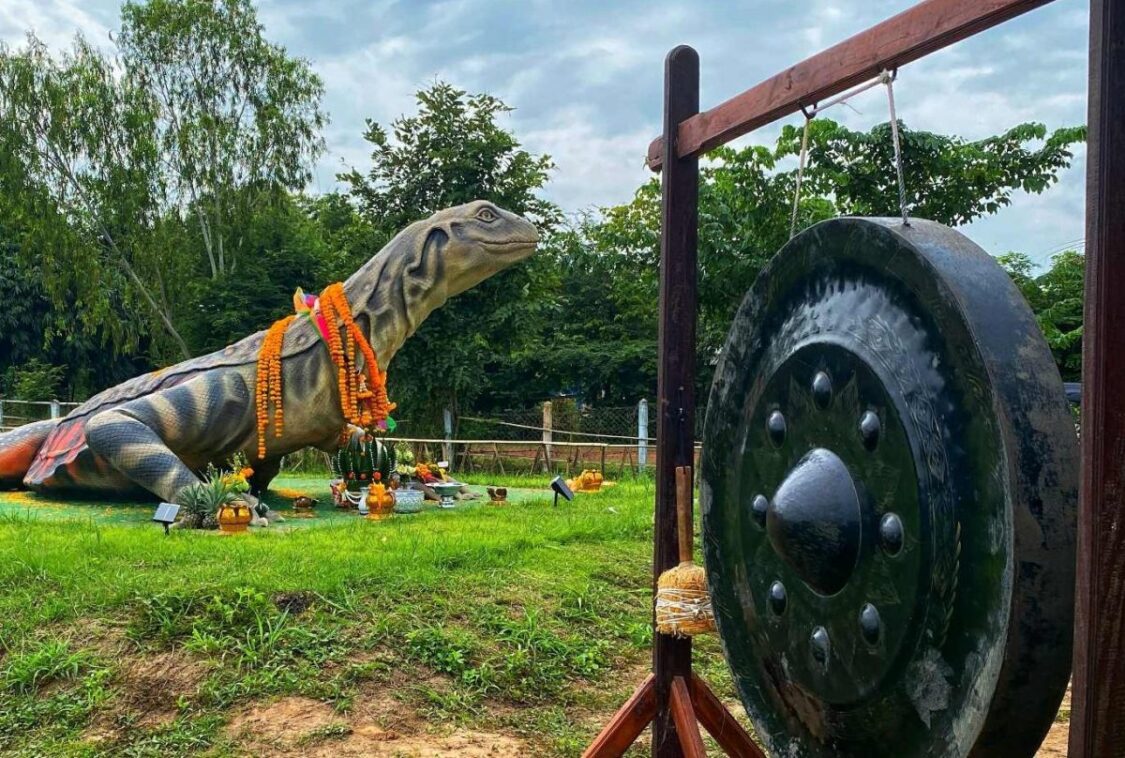
The landmark is not a temple or a towering monument, but an impressive statue of a small, unassuming lizard: Paya Yae (พญาแญ้), known affectionately as Ai Yong (ไอ้หย่อง), a nickname which refers to the way the lizard darts through the grass.
Such nicknames are common in rural Isaan communities, where animals (especially ones seen frequently) are given informal, affectionate, or playful names — often with the prefix “ไอ้” for animals or spirits that are familiar to the villagers.
Paya Yae has long been part of daily life in Ban Pracha Suksan. And now it’s been raised — both literally and symbolically — as the official emblem of the community.
More than just a sculpture, the statue of Paya Yae represents the village’s values: resilience, peaceful coexistence with nature, and a quiet pride in what others might overlook.
A Living Symbol Beneath the Grass
The yae (แย้) is a small ground-dwelling lizard that has lived alongside the people of Ban Pracha Suksan since the earliest days of the village’s founding in the 1960s. It prefers open spaces and soft ground, digging shallow burrows beneath the grass and feeding on insects and wild greens. During the month of May, these lizards often emerge in great numbers — a seasonal pattern locals refer to as “Yae Ja Sin” (แญ้จ่าศีล).
In the past, they were most commonly seen near the village temple, Wat Pracha Suksan Wararam. But when the village school was established, complete with a wide, sunlit field, the lizards flourished. They became familiar to generations of children, who played beside them daily. Over time, they became so closely associated with the school that visitors began referring to it as “the school with all the lizards.”
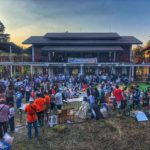
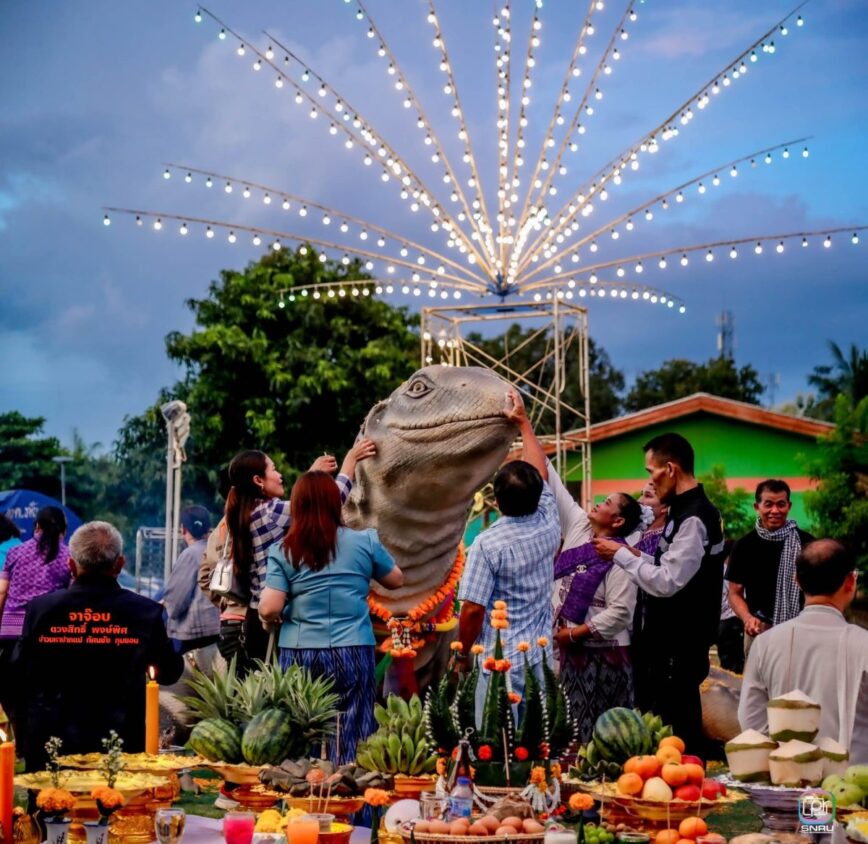
On August 1st (2025), a special Buddhist blessing ceremony was held for the new Paya Yae statue on the school grounds, establishing it as the village guardian, as well as a visual marker of what makes Ban Pracha Suksan unique — not wealth, not fame, but an ability to see value in the everyday.
It is one of two such statues in Thailand, joined only by a similar Paya Yae sculpture in Ban Song Yae, Yasothon province. Both represent a quiet movement: the celebration of local, living symbols that often go unrecognized.
A Village Rooted in Memory
Ban Pracha Suksan was founded in 1968 by a small group of families led by Samma Luangmanee (สัมมา หลวงมณี), who moved to the area from scattered rice fields and uplands. At the time, the village was still considered a “red zone” — marked by political unrest — but through Samma’s fatherly leadership, the village grew steadily and peacefully.
In 2002, it received the royal flag as a drug-free village — a symbol of transformation and progress born from strong community values. The rise of Paya Yae echoes this legacy. Like the village itself, the lizard has endured quietly, adapting to change while remaining close to the land.
Sacred Ground and Spiritual Guardians
Just beyond the school and the statue stands another pillar of village life: Pu Ta Ruay Shrine (ศาลปู่ตารวย). According to local belief, this shrine is protected by the spirit of Ta Ruay, who once used the land to graze buffalo. After a reservoir was built nearby, he relocated — but the shrine remains a sacred site for the village.
Villagers speak of Ta Ruay’s spirit appearing as a large black dog, protecting them in times of need. One story tells of a man saved from a deadly storm at sea after praying to Pu Ta Ruay. Today, villagers still visit the shrine to seek blessings for health, education, and livelihood. Annual offerings are made with care: flowers, white liquor, chicken or pork — always prepared with sincerity.
A Legacy Carved in Earth, Spirit, and Stone
The Paya Yae statue may not be enormous. It does not roar or shimmer in gold. But that is precisely what makes it powerful. It reflects a different kind of strength — the kind that lives in stillness, in watching, in surviving without needing to dominate.
By choosing to honor a lizard, Ban Pracha Suksan has honored itself. The village’s past, its values, and its relationship with the land all come together in this new landmark. And for anyone who visits, Paya Yae offers more than a photo — it offers a glimpse into a way of life shaped by humility, care, and deep-rooted connection.
- How I Wrote “Rak Sakon Nakhon”: A Thai Song for the Road Home - September 12, 2026
- Easy Thai Songs to Sing & Learn for Karaoke - September 5, 2026
- Reframe Your Brain for Thai Learning - April 18, 2026